Category: Islamic History

  • Jang-e-Jamal Se Siffin Tak: Sahaba Ke Darmiyan Disputes (Ikhtilaafaat) Ko Kaise Samjhein?

    Jang-e-Jamal Se Siffin Tak: Sahaba Ke Darmiyan Disputes (Ikhtilaafaat) Ko Kaise Samjhein?

    Sahaba Ke Darmiyan Disputes Ko Kaise Samjhein?

    5 Minutes In Short


    Jang-e-Jamal aur Jang-e-Siffin jaise waqiat ko samajhne ke liye sabse pehle ye baat samajhna zaroori hai ke Sahaba-e-Kiram رضی اللہ عنہم ke darmiyan jo disputes hue, unhein aam siyasi ya personal ladai ke taur par dekhna Ahlus Sunnat ka approach nahi hai.

    1. Hazrat Ayesha رضی اللہ عنہا ka Jang-e-Jamal mein jaana

    Kuch log Surah Al-Ahzab ki ayat:

    وَقَرْنَ فِي بُيُوتِكُنَّ

    “Apne gharon mein thehri raho”

    se ye objection karte hain ke Hazrat Ayesha رضی اللہ عنہا ka Jang-e-Jamal ke safar par jaana Quran ke khilaf tha.

    Lekin is ayat ka matlab ye nahi ke Nabi-e-Kareem ﷺ ki azwaj-e-mutahharat kisi zaroorat ya dini maqsad ke liye kabhi ghar se bahar hi nahi ja sakti thin.

    Woh Hajj aur Umrah ke liye gayin, Nabi ﷺ ke saath safar aur ghazawat mein bhi rahi, rishtedaron se milne aur doosri zaroori zaruriyat ke liye bhi bahar niklin.

    Shah Abdul Aziz Muhaddis Dehlawi رحمۃ اللہ علیہ ke mutabiq, Hazrat Ayesha رضی اللہ عنہا ka Jang-e-Jamal ka safar Muslims ke darmiyan sulah aur unity ki koshish aur Hazrat Usman رضی اللہ عنہ ke qatl ka qisas dilane ke maqsad se tha.

    Reference: Tuhfa Ithna Ashariyah, p. 630.

    2. Kya Hazrat Ayesha رضی اللہ عنہا bina mahram ke gayi thin?

    Ye bhi ek objection kiya jata hai.

    Lekin source mein Shah Abdul Aziz Muhaddis Dehlawi رحمۃ اللہ علیہ ne wazeh kiya hai ke Hazrat Ayesha رضی اللہ عنہا ke saath unki behnon ke bete maujood the.

    Hazrat Abdullah bin Zubair رضی اللہ عنہ, jo unki behen Hazrat Asma رضی اللہ عنہا ke bete the, unke saath the. Isi tarah Hazrat Talha رضی اللہ عنہ aur Hazrat Zubair رضی اللہ عنہ bhi maujood the.

    Is liye ye kehna ke Hazrat Ayesha رضی اللہ عنہا bina mahram ke safar par nikli thin, source ke mutabiq durust nahi.

    References: Tuhfa Ithna Ashariyah, p. 330; Ruh al-Ma‘ani, Jild 22, p. 10.

    3. Kya Hazrat Ayesha رضی اللہ عنہا Hazrat Ali رضی اللہ عنہ se dushmani ki wajah se gayi thin?

    Ye claim bhi kiya jata hai ke Hazrat Ayesha رضی اللہ عنہا ko Hazrat Ali رضی اللہ عنہ se personal hostility thi aur baad mein unhein apne faisle par regret hua.

    Lekin source mein is interpretation ko reject kiya gaya hai.

    Interesting baat ye hai ke Jang-e-Jamal ke baad Hazrat Ali رضی اللہ عنہ ne bhi Muslimon ke darmiyan hui fighting aur khoon-rezi par gehra afsos zahir kiya.

    Mahmood Aalusi رحمۃ اللہ علیہ likhte hain ke jab Hazrat Ali رضی اللہ عنہ ne mare hue logon ko dekha to unhone apne ranon par haath maara aur kaha:

    “Ya laytani mittu min qabli haza wa kuntu nasyan mansiyya.”

    Yani, kaash main is se pehle hi mar gaya hota aur logon ki yaadon se bhula diya gaya hota.

    Reference: Ruh al-Ma‘ani, Jild 22, p. 11.

    Isliye Hazrat Ayesha رضی اللہ عنہا ka afsos personal hatred ka proof nahi, balki Muslims ke darmiyan hui fighting aur separation ka afsos samjha gaya hai.

    4. Haw’ab ke kutto wali riwayat

    Ek mashhoor riwayat mein aata hai ke safar ke dauran jab Hazrat Ayesha رضی اللہ عنہا ek jagah pahunchin jahan kutte bhonk rahe the, to unhone poocha ke ye jagah kaunsi hai. Jab kaha gaya ke ye Haw’ab hai, to unhone wapas jaane ki baat ki, kyunki Nabi-e-Kareem ﷺ ki ek prediction unhein yaad thi.

    Lekin source mein is riwayat ke sanad aur narrators par detailed discussion ki gayi hai aur ise reliable historical fact maan lene par objections raise kiye gaye hain.

    Aur agar bil-farz riwayat ko accept bhi kar liya jaye, to is mein Nabi ﷺ ki taraf se ye clear command nahi thi ke agar Haw’ab aaye to lazmi taur par wapas lautna hai.

    Isliye is riwayat ki bunyaad par Hazrat Ayesha رضی اللہ عنہا par jaan-boojh kar Nabi ﷺ ki na-farmani ka ilzam lagana source ke mutabiq durust nahi.


    In Detail

    Jang-e-Siffin

    Jang-e-Siffin 37 Hijri mein Hazrat Ali رضی اللہ عنہ aur Hazrat Muawiyah رضی اللہ عنہ ke groups ke darmiyan hui.

    Is dispute ka central issue khilafat se zyada Hazrat Usman رضی اللہ عنہ ke qatl ka qisas tha.

    Hazrat Muawiyah رضی اللہ عنہ aur Shaam ke unke saathiyon ka موقف ye tha ke Hazrat Usman رضی اللہ عنہ ko na-haq qatl kiya gaya aur qatil log Iraqi army mein maujood the. Isliye unhein qisas ke liye pakarna zaroori tha.

    Dusri taraf Hazrat Ali رضی اللہ عنہ ka view ye tha ke pehle bay‘ah aur hukumat ko stable kiya jaye, phir qisas ka matter Shariat ke mutabiq handle kiya jaye.

    Yani dono sides ke paas apni apni reasoning thi.

    Reference: Al-Bidayah wan Nihayah, Jild 8, p. 127; Fath al-Bari, Jild 3, p. 246.

    Hazrat Ali رضی اللہ عنہ ke side ka concern ye tha ke qatil log bade qabail aur groups ke darmiyan mix ho chuke the. Unhein foran arrest karna Muslim state ko aur zyada unstable kar sakta tha.

    Isi tarah Hazrat Muawiyah رضی اللہ عنہ aur unke saathiyon ke liye Hazrat Usman رضی اللہ عنہ ke qatl ka qisas ek serious matter tha.

    Dono sides ke darmiyan mediation aur negotiations ki koshish bhi hui, lekin settlement nahi ho saka aur aakhirkar fighting hui.

    Jang mein dono sides ke kai Sahaba aur Muslims shaheed hue.

    Hazrat Ali رضی اللہ عنہ ki side se Hazrat Ammar bin Yasir رضی اللہ عنہ aur Hazrat Khuzaimah bin Thabit رضی اللہ عنہ jaise buzurg Sahaba shaheed hue, jabki Hazrat Muawiyah رضی اللہ عنہ ki side se bhi kai prominent log mare gaye.

    Inna lillahi wa inna ilayhi raji‘un.

    Baad mein Hazrat Ali رضی اللہ عنہ aur Hazrat Muawiyah رضی اللہ عنہ ki taraf se ek-ek arbitrator muqarrar hua: Hazrat Abu Musa Ash‘ari رضی اللہ عنہ aur Hazrat Amr bin al-As رضی اللہ عنہ.

    References: Tarikh Khalifah bin Khayyat, Jild 1, pp. 173–174; Al-Ibar, Jild 1, p. 43.


    Kya Sahaba ek dusre ko gaali dete the?

    Kuch historical reports mein Hazrat Ali رضی اللہ عنہ ke group ki taraf Hazrat Muawiyah رضی اللہ عنہ ke group ke liye harsh language aur sabb-o-shatm ki baatein milti hain.

    Lekin source mein in reports ke narrators par detailed criticism kiya gaya hai. Isliye in reports ko basis bana kar Sahaba-e-Kiram رضی اللہ عنہم ki overall character ko judge karna theek nahi.

    Aur agar koi narration kisi Sahabi ki taraf literally gaali ya laanat ko attribute kare, to usko un ahadith ke saath bhi dekha jayega jahan Muslims ko ek dusre ko gaali dene aur kafir kehne se mana kiya gaya hai.


    Imam Ibn Hajar رحمۃ اللہ علیہ ka approach

    Imam Ibn Hajar Asqalani رحمۃ اللہ علیہ ke mutabiq, in wars mein Sahaba ke bare mein achha gumaan rakhna chahiye.

    Unka kehna hai ke Sahaba ne apne ijtihad ke mutabiq action liya. Mujtahid agar sahi decision tak pahunchta hai to do rewards aur agar mistake karta hai to bhi ek reward milta hai.

    Reference: Al-Isabah fi Tamyiz al-Sahabah, Jild 7, p. 312.

    Fath al-Bari mein bhi Imam Ibn Hajar رحمۃ اللہ علیہ ne Ahlus Sunnat ka ye approach mention kiya hai ke Sahaba par in events ki wajah se attack nahi karna chahiye. Unhone apne ijtihad ke mutabiq action liya aur jaan-boojh kar gunah ka irada nahi tha.

    Reference: Fath al-Bari, Jild 13, p. 43.


    Imam Nawawi رحمۃ اللہ علیہ ka view

    Imam Nawawi رحمۃ اللہ علیہ Sharh Sahih Muslim mein likhte hain ke Ahlus Sunnat ka approach ye hai ke tamam Sahaba رضی اللہ عنہم ke saath husn-e-zann (achha gumaan) rakha jaye aur unke darmiyan hue disputes ke bare mein unnecessary discussion se bacha jaye.

    Unke mutabiq, Sahaba ne apne ijtihad ke basis par fighting ki. Har group ko apna position sahi lag raha tha. Kuch logon ka ijtihad correct tha aur kuch se mistake hui, lekin ijtihadi mistake ki wajah se woh blameworthy nahi hote.

    Imam Nawawi رحمۃ اللہ علیہ ke mutabiq, in wars mein Hazrat Ali رضی اللہ عنہ ka position correct tha, jabki Hazrat Muawiyah رضی اللہ عنہ aur unke saathiyon ke liye bhi ijtihad ki wajah se excuse ka principle apply hota hai.

    Reference: Sharh Sahih Muslim, Jild 2, p. 390.


    Hazrat Usman رضی اللہ عنہ ke qatl mein Sahaba ka kya role tha?

    Hazrat Usman Ghani رضی اللہ عنہ rightful Khalifah the aur unhein zulm ke saath shaheed kiya gaya.

    Source ke mutabiq, kisi Sahabi ka unke qatl ko approve karna established nahi hai. Sahaba ki taraf se unke qatl se disagreement aur inkaar established hai.

    Unke qatl ke baad asal dispute ye bana ke qisas kab aur kis tarah liya jaye?

    Hazrat Ali رضی اللہ عنہ ka view tha ke situation ko stable karne ke baad qisas liya jaye, jabki Hazrat Ayesha رضی اللہ عنہا aur kuch doosre Sahaba ka view tha ke qisas jaldi hona chahiye.

    Yahan dono sides apne ijtihad aur maslahah ki samajh ke mutabiq action le rahi thin.

    Hazrat Ali رضی اللہ عنہ ke Khalifah banne ke baad unki khilafat valid thi, aur Hazrat Muawiyah رضی اللہ عنہ aur unke saathiyon ka Hazrat Ali رضی اللہ عنہ ke saath dispute unke apne interpretation aur ijtihad ki wajah se tha.

    Isliye Ahlus Sunnat ka approach ye hai ke Sahaba-e-Kiram رضی اللہ عنہم ke darmiyan in tragic events ko samajhte waqt adab aur husn-e-zann ko maintain kiya jaye.

    Ek mashhoor baat isi meaning ko summarize karti hai:

    “Ye woh khoon hai jisse Allah ne hamare haath ko paak rakha, to apni zubaan ko is se na rang do.”

    Yani jis fight mein Allah ne humein directly involve nahi kiya, uske bare mein apni zubaan ko unnecessary criticism aur disrespect se bachana chahiye.


    Bottom Line

    Jang-e-Jamal aur Jang-e-Siffin ko sirf “Sahaba aapas mein lad pade” keh dena in complex historical events ko bahut simplify kar deta hai.

    Ahlus Sunnat ke nazdeek Sahaba رضی اللہ عنہم deen ke transmitters aur Nabi-e-Kareem ﷺ ke companions the. In events mein unhone apni samajh aur ijtihad ke mutabiq decisions liye.

    Kisi ne correct ijtihad kiya aur kisi se mistake hui, lekin is wajah se Sahaba ki tauheen ya unke bare mein bad-zabani karna Ahlus Sunnat ka approach nahi.

    Isliye in historical disputes ko samajhne ka basic principle hai:

    Sahaba-e-Kiram رضی اللہ عنہم ka adab, Ahl al-Bayt se mohabbat, aur unke darmiyan hue disputes mein zubaan ko unnecessary criticism se bachana.

    Original source: Dr. Faiz Ahmad Chishti | Rephrased and simplified by Nayab Beig.


    Sahaba-e-Kiram رضی اللہ عنہم Ke Darmiyan Jo Disputes Hue — Ahl-e-Sunnat Ka Mauqif

    Hissa 4

    Sahaba-e-Kiram رضی اللہ عنہم ki zindagi mein jo kuch events hue, unmein Jang-e-Jamal aur Jang-e-Siffin bhi shamil hain. In events ko lekar baad ke zamane mein kai questions aur objections uthaye gaye.

    Ahl-e-Sunnat Wal Jamaat ka approach ye hai ke Sahaba-e-Kiram رضی اللہ عنہم ke baare mein حسنِ ظن (achha gumaan) rakha jaaye, unke darmiyan hone wale disputes ko samjha jaaye aur unki izzat aur adab ko maintain kiya jaaye.


    Ummul Momineen Hazrat Ayesha رضی اللہ عنہا Par Kiye Gaye Objections Ke Jawaab

    Jang-e-Jamal mein participation ki wajah se Ummul Momineen Hazrat Ayesha Siddiqah رضی اللہ عنہا par kuch objections kiye jaate hain. Aaiye inmein se kuch important objections ko samajhte hain.


    Objection #1: Kya Hazrat Ayesha رضی اللہ عنہا Ne Ghar Se Bahar Nikal Kar Quran Ke Hukm Ki Violation Ki?


    Objection ye hai ke Quran-e-Kareem mein Nabi ﷺ ki Azwaj-e-Mutahharat رضی اللہ عنہن ko farmaya gaya:

    “Wa qarna fi buyutikunna wa la tabarrajna…”

    Yani apne gharon mein thehri raho aur purane Jahiliyyat ke zamane ki tarah apni zeenat dikha kar bahar na niklo.

    Is basis par kaha jaata hai ke Hazrat Ayesha رضی اللہ عنہا ka Jang-e-Jamal ke liye ghar se bahar nikalna Quran ke hukm ki clear violation thi.

    Jawaab

    Is baat ko samajhne ke liye ayat ka context dekhna zaroori hai.

    Is ayat mein gharon mein rehne ka jo hukm diya gaya hai, wo har situation mein ghar se bahar nikalne ko ban nahi karta. Iska relation Jahiliyyat ke zamane ki tarah zeenat dikha kar aur bina proper parda ke bahar nikalne se hai.

    Agar Ummul Momineen رضی اللہ عنہن ka ghar se bahar nikalna completely forbidden hota, to phir wo khud ye shar‘i kaam kaise kartin?

    Unke liye ye kaam bhi sabit hain:

    1. Hajj aur Umrah ke liye safar karna.
    2. Ghazwat mein Nabi-e-Kareem ﷺ ke saath jaana.
    3. Nabi ﷺ ki bimari ke waqt apne hujron se nikal kar Hazrat Ayesha رضی اللہ عنہا ke Hujra-e-Mubarak mein iyadat ke liye jaana.
    4. Kisi ke inteqal par ta‘ziyat ke liye jaana.
    5. Parents aur relatives se mulaqat ke liye jaana.
    6. Mareez ki iyadat ke liye jaana.
    7. Hazrat Umar رضی اللہ عنہ ke zamane mein jab Ummul Momineen Hajj ke safar par jaane lagin, to Hazrat Umar رضی اللہ عنہ ne Hazrat Usman Ghani رضی اللہ عنہ aur Hazrat Abdur Rahman bin Auf رضی اللہ عنہما ko unke saath protection ke liye bheja.

    (Ruh al-Ma‘ani, Jild 22, Safha 12, Taht al-Ayah: “Wa qarna fi buyutikunna”)

    Isse pata chalta hai ke Ummul Momineen ka ghar se bahar nikalna absolutely prohibited nahi tha.

    Wo zaroorat aur shar‘i purpose ke liye parda aur hijab ke saath ghar se bahar nikalti thin.

    Aaj bhi parda karne wali women zaroorat ke mutabiq safar karti hain, khaas taur par jab safar ka koi dini, qaumi ya duniyaavi purpose ho, jaise Hajj, Umrah ya Jihad.

    Isi tarah Jang-e-Jamal ke waqt Hazrat Ayesha رضی اللہ عنہا ne bhi ek dini purpose ke liye safar kiya tha: Muslims ke darmiyan sulah aur unity ki koshish karna aur Hazrat Usman رضی اللہ عنہ ke qatl ka qisas lene ka demand karna.

    Imam-ul-Muhaddiseen Hazrat Shah Abdul Aziz Muhaddis Dehlawi رحمۃ اللہ علیہ likhte hain ke Ummul Momineen Hazrat Ayesha رضی اللہ عنہا ka ye safar bhi isi purpose se tha ke Muslims ke darmiyan jo conflict paida ho gaya tha, usko solve kiya jaaye aur ek adil Imam ke qatl ka qisas lene ke demand par Muslims ko ek saath kiya jaaye.

    Aap رحمۃ اللہ علیہ ne is safar ko Hajj aur Umrah ke safar jaisa qarar diya.

    (Tuhfa-e-Isna Ashariyah, Safha 630, Alami Majlis Tahaffuz-e-Islam, Karachi)


    Objection #2: Kya Hazrat Ayesha رضی اللہ عنہا Ka Safar Baghair Mahram Tha?

    Objection ye kiya jaata hai ke Hazrat Ayesha رضی اللہ عنہا ka ye safar bina Mahram ke tha, isliye shar‘an ye safar sahi nahi tha.

    Jawaab

    Ye objection bhi sahi nahi.

    Hazrat Ayesha رضی اللہ عنہا ka safar ek nek purpose ke liye tha aur aap ke saath shar‘i Mahram bhi maujood the.

    Ulama ne clearly mention kiya hai ke is safar mein aapki behnon, Hazrat Asma aur Hazrat Umm Kulsum ke bete bhi saath the.

    Imam-ul-Muhaddiseen Hazrat Shah Abdul Aziz Muhaddis Dehlawi رحمۃ اللہ علیہ likhte hain:

    “Is safar mein Abdullah bin Zubair رضی اللہ عنہ, jo unke real bhanje the, unke saath the. Talha bin Ubaidullah رضی اللہ عنہ, jo unki behen Umm Kulsum ke husband the, aur Zubair bin Awwam رضی اللہ عنہ, jo unki doosri behen Asma ke husband the, bhi maujood the. In dono ke bachche bhi unke saath the.”

    (Tuhfa-e-Isna Ashariyah, Safha 330, Lahore Edition)

    Isi tarah great Mufassir Syed Mahmood Aalusi رحمۃ اللہ علیہ likhte hain ke Hazrat Ayesha رضی اللہ عنہا ke saath unke bhanje Abdullah bin Zubair aur unki behnon ke bete maujood the. Aap ek iron-covered howdah mein safar kar rahi thin.

    (Ruh al-Ma‘ani, Jild 22, Safha 10, Taht al-Ayah: “Wa qarna fi buyutikunna”)

    Yani simple baat ye hai ke Hazrat Ayesha رضی اللہ عنہا ka ye safar Mahram ke saath tha. Isliye ye objection bhi khatam ho jaata hai.


    Objection #3: Kya Hazrat Ayesha رضی اللہ عنہا Ne Hazrat Ali رضی اللہ عنہ Se Dushmani Ki Wajah Se Jang Ki?

    Ek aur objection ye hai ke Hazrat Ayesha رضی اللہ عنہا ne Hazrat Ali رضی اللہ عنہ se personal hatred ya dushmani ki wajah se qital kiya.

    Phir kaha jaata hai ke baad mein aapko apne decision par regret hua aur aap roti thin.

    Isi tarah Hazrat Talha رضی اللہ عنہ aur Hazrat Zubair رضی اللہ عنہ par bhi ye allegation lagaya jaata hai ke unki Hazrat Ali رضی اللہ عنہ ki khilafat se dushmani thi aur Hazrat Usman رضی اللہ عنہ ke qisas ka demand sirf ek excuse tha.

    Jawaab

    Is objection ke jawab mein kuch important points samajhna zaroori hai.

    1. Sahaba aur Ahl-e-Bait ke darmiyan mohabbat thi

    Ye kehna ke Hazrat Ayesha رضی اللہ عنہا ya doosre Sahaba ka Ahl-e-Bait se dushmani ka relation tha, sahi nahi.

    Ahl-e-Bait ke saath Hazrat Ali رضی اللہ عنہ aur doosre Sahaba ka bohot achha rawayya tha. Isi tarah Ahl-e-Bait bhi Hazrat Ali رضی اللہ عنہ aur doosre Sahaba-e-Kiram رضی اللہ عنہم se mohabbat aur respect ka relation rakhte the.


    2. Jang-e-Jamal Par Hazrat Ali رضی اللہ عنہ Ne Bhi Afsos Kiya

    Sirf Hazrat Ayesha رضی اللہ عنہا ne hi Jang-e-Jamal ke baad afsos nahi kiya.

    Hazrat Ali رضی اللہ عنہ se bhi is event par afsos aur dukh ka izhar manqool hai.

    Syed Mahmood Aalusi رحمۃ اللہ علیہ likhte hain ke jab Ummul Momineen ke saath maujood logon ko defeat hui aur dono sides ke log qatl hue, to Hazrat Ali رضی اللہ عنہ maqtoolon ke paas se guzre.

    Aap apni raanon par haath maar kar farmate the:

    “Ya laytani mittu min qabli haza wa kuntu nasyan mansiyya.”

    Yani:

    “Kaash main isse pehle hi wafat paa gaya hota aur bhula diya gaya hota.”

    (Ruh al-Ma‘ani, Jild 22, Safha 11)

    Imam Shah Abdul Aziz Muhaddis Dehlawi رحمۃ اللہ علیہ bhi isi event ko mention karte hain.

    (Tuhfa-e-Isna Ashariyah, Safha 335)

    Ab agar Hazrat Ayesha رضی اللہ عنہا ke afsos ko unki Hazrat Ali رضی اللہ عنہ se dushmani ka proof banaya jaaye, to phir Hazrat Ali رضی اللہ عنہ ke is afsos ko kis tarah samjha jayega?

    Dono jagah afsos ka context Muslims ke aapas mein qital aur khoon bahne ka tha.


    3. Afsos Ka Matlab Personal Dushmani Nahi Tha

    Hazrat Ayesha رضی اللہ عنہا aur doosre Sahaba رضی اللہ عنہم ka Jang-e-Jamal ke baad afsos aur pareshani ka reason Allah ka khauf, taqwa aur Muslims ke darmiyan qital tha.

    Is afsos ko Hazrat Ali رضی اللہ عنہ ya Hazrat Ayesha رضی اللہ عنہا ki ek doosre se personal hatred aur dushmani ka proof banana asal context se alag meaning nikalna hai.


    Objection #4: Waqia-e-Haw’ab — Kya Hazrat Ayesha رضی اللہ عنہا Ne Nabi ﷺ Ke Farman Ki Mukhalifat Ki?

    Ek famous objection Waqia-e-Haw’ab ko lekar kiya jaata hai.

    Riwayat mein aata hai ke jab Hazrat Ayesha رضی اللہ عنہا ka qafila Makkah se Basra ki taraf ja raha tha, to raste mein ek jagah dogs bhonkne lage.

    Hazrat Ayesha رضی اللہ عنہا ne poocha:

    “Ye kaunsi jagah hai?”

    Muhammad bin Talha رضی اللہ عنہ ne jawab diya:

    “Haw’ab.”

    Ye sun kar Hazrat Ayesha رضی اللہ عنہا ne farmaya:

    “Mujhe wapas le chalo.”

    Kyunki Nabi-e-Kareem ﷺ ne ek martaba apni Azwaj se farmaya tha ke tum mein se ek ke baare mein kya haal hoga jab Haw’ab ke dogs us par bhonkenge.

    Iske baad Hazrat Talha, Hazrat Zubair aur lashkar ke kuch doosre logon ne check kiya aur kaha ke ye Haw’ab ki jagah nahi hai.

    Logon ki gawahi ke baad Hazrat Ayesha رضی اللہ عنہا ne safar continue kiya.

    Opponents is riwayat ko use karke kehte hain ke Hazrat Ayesha رضی اللہ عنہا ne Nabi ﷺ ke farman ko jaanne ke baad bhi uski openly violation ki.

    Jawaab

    Is objection ka jawab do angles se diya ja sakta hai:

    1. Riwayat ke point of view se.
    2. Dirayat, yani meaning aur understanding ke point of view se.

    Riwayat Ke Point of View Se

    1. Ye Riwayat Reliable Hadith Books Mein Is Tarah Maujood Nahi

    Is waqie ki riwayat reliable Hadith books mein is tarah maujood nahi hai.

    2. Iski Kai Chains Ka Last Narrator Qais Bin Abi Hazim Hai

    Is waqie ki kai riwayaton ka last narrator Qais bin Abi Hazim hai.

    Rijal ke scholars ne Qais bin Abi Hazim ke baare mein criticism mention kiya hai aur unki kuch riwayaton ko munkar kaha hai.

    Inhi mein “Kilaab-ul-Haw’ab” wali riwayat bhi mention ki gayi hai.

    Hafiz Ibn Hajar Asqalani رحمۃ اللہ علیہ likhte hain ke Yahya bin Saeed ne Qais bin Abi Hazim ko munkar al-hadith kaha aur unki kuch munkar ahadith mention ki, jinmein Hadith-e-Kilaab-ul-Haw’ab bhi thi.

    (Tahzeeb al-Tahzeeb, Jild 8, Safha 388, Taht Qais bin Abi Hazim)

    3. Kuch Riwayaton Mein Abdul Rahman Bin Saleh Al-Azdi Bhi Hain

    Kuch riwayaton mein Abdul Rahman bin Saleh al-Azdi ka bhi zikr hai.

    Rijal ke scholars ne unke baare mein bhi criticism mention kiya hai aur unko Sahaba ke khilaf negative riwayat bayan karne wala Shia narrator kaha hai.

    (Al-Kamil li-Ibn Adi, Jild 4, Safha 1627, Taht Abdul Rahman bin Saleh)

    (Al-Ilal al-Mutanahiyah fil-Ahadith al-Wahiyah li-Ibn al-Jawzi, Jild 2, Safha 366)

    4. Maulana Muhammad Nafi‘ رحمۃ اللہ علیہ Ka Statement

    Great researcher Maulana Muhammad Nafi‘ رحمۃ اللہ علیہ farmate hain ke is event ki aam riwayatein muhadditheen ke nazdeek weak paayi jaati hain aur aksar scholars ke nazdeek is waqie ki riwayat munkar aur majrooh hai.

    (Seerat Sayyid Ali al-Murtaza, Safha 241)

    5. Ye Event Historians Mein Bhi Agreed Fact Nahi

    Waqia-e-Haw’ab ko ek aisa historical event nahi kaha ja sakta jise har historian ne unanimously mention kiya ho.

    Purane historians mein se kai ne is event ko mention hi nahi kiya.

    Misal ke taur par:

    • Khalifah bin Khayyat, wafat 240 AH.
    • Ahmad bin Dawud al-Dinawari, author of Akhbar al-Tiwal, wafat 282 AH.

    Kuch historians ne is event ko mention kiya hai, lekin unki chains par bhi criticism kiya gaya hai.

    Misal ke taur par Imam Tabari ne apni History mein is waqie ko ek chain ke saath mention kiya.

    Is chain mein:

    • Tabari ke teacher Ismail bin Musa al-Fazari ka zikr hai.
    • Uske baad Ali bin Abis al-Razzaq ka zikr hai.
    • Phir Abu al-Khattab al-Hijri aur Safwan bin Qabisah al-Ahmasi hain.
    • Aur unke upar ke narrators bhi unknown bataye gaye hain.

    Source material ke mutabiq is wajah se Tabari ki ye chain reliable nahi hai.


    Dirayat Ke Point of View Se

    Agar discussion ke liye maan bhi liya jaaye ke Waqia-e-Haw’ab ki riwayat correct hai, tab bhi isse ye conclusion nahi nikalta ke Hazrat Ayesha رضی اللہ عنہا ne Nabi ﷺ ke farman ki jaan-boojh kar mukhalifat ki.

    Kyun?

    Kyunki Nabi-e-Kareem ﷺ ne apni Azwaj ko sirf ye bataya tha ke future mein unmein se ek ke saath ye event pesh aayega.

    Aap ﷺ ne ye nahi farmaya tha ke Haw’ab ke paas se guzarna forbidden hai ya agar koi wahan tak pahunch jaaye to usay aage nahi jaana.

    Isliye is prediction ko ek prohibition ya command samajhna aur phir Hazrat Ayesha رضی اللہ عنہا par Nabi ﷺ ki mukhalifat aur zid ka allegation lagana sahi nahi.


    Jang-e-Siffin

    Ab aate hain Jang-e-Siffin ki taraf.

    Bilad-e-Sham ke mashriqi side mein ek jagah hai jiska naam Siffin hai. Yahin dono sides ki armies ka gathering hua.

    Ye event Muharram 37 Hijri ka hai.


    Dono Sides Ka Basic Mauqif Kya Tha?

    Hazrat Ali رضی اللہ عنہ ka view ye tha ke Hazrat Usman رضی اللہ عنہ ke qatl ka qisas zaroor liya jaayega, lekin pehle log khilafat par bay‘at karein.

    Uske baad qisas ka demand Khalifa ki council mein present kiya jaaye aur Shariat ke mutabiq uska decision kiya jaaye.

    (Al-Bidayah wan-Nihayah li-Ibn Kathir, Jild 8, Safha 127, Taht Tarjumah Muawiyah)

    Doosri taraf Hazrat Amir Muawiyah رضی اللہ عنہ aur unke saath maujood kai Sahaba ka view ye tha ke Hazrat Usman رضی اللہ عنہ mazloom tareeqe se shaheed kiye gaye aur unke killers Hazrat Ali رضی اللہ عنہ ki army mein maujood the.

    Isliye unka demand tha ke un qatiloon se qisas liya jaaye.

    Unki taraf se ye bhi kaha gaya ke unka dispute khilafat ke liye nahi, balki Hazrat Usman رضی اللہ عنہ ke qisas ke issue par tha.

    (Al-Fitnah wa Waq‘at al-Siffin li-Nasr bin Muzahim, Safha 70)

    Isi meaning ko Fath al-Bari mein bhi mention kiya gaya hai:

    (Fath al-Bari, Jild 3, Safha 246, Kitab al-I‘tisam bil-Kitab was-Sunnah)

    Aur Al-Yawaqit wal-Jawahir mein bhi is disagreement ka reason Hazrat Usman رضی اللہ عنہ ke killers ko qisas ke liye hand over karne ka issue bataya gaya hai.

    (Al-Yawaqit wal-Jawahir, Jild 2, Safha 27)
    (Al-Musamarah, Safha 158-159)

    Yani dono sides ka basic difference qisas kab aur kis tarah liya jaaye, is point par tha.


    Ek Common Objection: Hazrat Muawiyah رضی اللہ عنہ Ne Qisas Ka Demand Kyun Kiya?

    Aksar objection hota hai:

    “Qisas demand karne ka haq to victim ke heirs ko hota hai. Phir Hazrat Muawiyah رضی اللہ عنہ ne ye demand kyun ki?”

    Iska jawab Shia sources mein bhi milta hai.

    Ek riwayat mein aata hai:

    “Inna Muawiyata yutalibu bi-dami Uthman wa ma‘ahu Aban bin Uthman wa waladu Uthman.”

    Yani Hazrat Muawiyah رضی اللہ عنہ ke saath Hazrat Usman رضی اللہ عنہ ke bete Aban aur unke doosre bete bhi Hazrat Usman رضی اللہ عنہ ke qisas ka demand kar rahe the.

    (Kitab Sulaym bin Qais al-Kufi al-Hilali al-Amiri al-Shi‘i, Safha 153, Najaf)


    Kya Dono Sides Ne Sulah Ki Koshish Nahi Ki?

    Aisa nahi tha.

    Dono sides ke beech dispute ko solve karne ki koshish bhi ki gayi.

    Us zamane ke kuch senior logon ne mediation ki.

    Ye efforts Kufa mein Hazrat Ali رضی اللہ عنہ ke camp se Hazrat Jarir bin Abdullah al-Bajali رضی اللہ عنہ ki mediation se start hue.

    Baad mein bhi different locations par sulah ki koshish hoti rahi.

    (Al-Bidayah, Jild 7, Safha 253, 258)
    (Siyar A‘lam al-Nubala, Jild 3, Safha 93)

    Lekin dono sides apni apni position se peeche nahi hatin aur eventually qital ki situation create ho gayi.

    Hafiz Ibn Hajar رحمۃ اللہ علیہ likhte hain:

    “Fa tarasaloo fa lam yatimm lahum amr, fa waqa‘al-qital ila an qutila min al-fariqayn.”

    Yani dono sides ke beech messages aur negotiations hoti rahin, lekin matter settle nahi hua aur aakhir qital hua, jisme dono sides ke log qatl hue.

    (Fath al-Bari, Jild 13, Safha 73)

    Is qital mein kitne log shaheed hue, exact number Allah hi jaanta hai.

    Allamah Ibn Kathir رحمۃ اللہ علیہ likhte hain:

    “Faqutila fi haza al-mawtin khalqun kathirun min al-fariqayn la ya‘lamuhu illallah.”

    Yani is maqam par dono sides se bohot se log qatl hue, jin ki exact tadaad Allah ke siwa koi nahi jaanta.

    (Al-Bidayah, Jild 7, Safha 271)

    Is qital mein Hazrat Ammar bin Yasir, Hazrat Khuzaimah bin Thabit رضی اللہ عنہما aur doosre senior Sahaba Hazrat Ali رضی اللہ عنہ ki side mein shaheed hue.

    Aur Hazrat Ubaidullah bin Umar bin Khattab, Hazrat Zul-Kifl aur Houshab رضی اللہ عنہم Hazrat Muawiyah رضی اللہ عنہ ki side se shaheed hue.

    Inna lillahi wa inna ilayhi raji‘un.

    Kuch historians ke mutabiq Safar 37 Hijri ke kuch din — Wednesday, Thursday, Friday aur Saturday ki raat — fighting bohot intense thi.

    (Al-Bidayah, Jild 7, Safha 261)

    Aakhir mein Hazrat Muawiyah رضی اللہ عنہ ki taraf se sulah ki invitation aayi. Hazrat Ali رضی اللہ عنہ ne ise accept kiya.

    Decide hua ke dono sides ki taraf se ek-ek hakam select kiya jaaye jo is issue par decision kare.

    Hazrat Ali رضی اللہ عنہ ki taraf se Hazrat Abu Musa Ash‘ari رضی اللہ عنہ aur Hazrat Muawiyah رضی اللہ عنہ ki taraf se Hazrat Amr bin al-Aas رضی اللہ عنہ ko select kiya gaya.

    Dono hakam Dumat al-Jandal ke maqam par milkar decision karne wale the.

    (Tarikh Khalifah bin Khayyat, Jild 1, Safha 173-174)
    (Al-Ibar li al-Dhahabi, Jild 1, Safha 43)


    Objection #5: Kya Hazrat Ali رضی اللہ عنہ Aur Unki Army Hazrat Muawiyah رضی اللہ عنہ Ko Gaaliyan Deti Thi?

    Ek aur objection ye kiya jaata hai ke Hazrat Ali رضی اللہ عنہ aur unki side ke log Hazrat Muawiyah رضی اللہ عنہ aur unki side ko gaaliyan dete aur laanat bhejte the.

    Jawaab

    Iske bhi kuch answers diye gaye hain.

    1. Is Tarah Ki Riwayaton Ki Chains Par Criticism Hai

    Jin riwayaton mein Hazrat Ali رضی اللہ عنہ aur Hazrat Muawiyah رضی اللہ عنہ ke darmiyan gaali-galoch ka zikr hai, unki chains par scholars ne criticism kiya hai.

    Misal ke taur par Abu Mikhnaf Lut, Yahya, Abu Janab Yahya bin Abi Hayyah al-Kalbi aur Hisham bin Saib al-Kalbi jaise narrators ka zikr milta hai.

    Source material mein in narrators ke baare mein sakht criticism mention kiya gaya hai.

    Isliye un riwayaton ko reliable nahi maana gaya.

    2. Hard Words Ka Matlab Hamesha Gaali Nahi Hota

    Kabhi kisi argument mein words sakht ya bitter ho sakte hain, lekin iska matlab ye zaroori nahi ke actual gaali-galoch ki gayi ho.

    Kabhi narrator kisi hard speech, strong criticism ya bitter disagreement ko “sabb-o-shatm” ke words mein describe kar deta hai.

    Aise cases mein purpose doosre side ke view ko wrong samajhna aur apne view ko correct samajhna ho sakta hai; actual gaali dena ya laanat bhejna zaroori nahi.

    3. Agar Aisi Koi Riwayat Maan Bhi Li Jaaye…

    Agar maan bhi liya jaaye ke kisi jagah aisi riwayat maujood hai jisme sabb-o-shatm ka zikr hai, to un riwayaton ke saath wo ahadith bhi dekhi jayengi jinmein sabb-o-shatm aur laanat se mana kiya gaya hai.

    Phir dono types ki riwayaton ke beech “wal-muharram muqaddamun ‘alal-mubah” ke principle ke mutabiq reconciliation ki jaayegi.

    Yani jis kaam se mana kiya gaya ho, usko allow karne wali riwayat par priority nahi di jaayegi.


    Sahaba Ke Disputes Par Imam Ibn Hajar Asqalani رحمۃ اللہ علیہ Ka Mauqif

    Imam Hafiz Abu al-Fadl Ahmad bin Ali bin Muhammad Ibn Hajar al-Asqalani رحمۃ اللہ علیہ, jo 852 Hijri mein wafat paaye, farmate hain:

    “Wal-zannu bis-sahabati fi tilkal-hurubi annahum kanu fiha muta’awwileena, wa lil-mujtahidi al-mukhti ajrun…”

    Yani:

    “In wars mein Sahaba-e-Kiram ke baare mein حسنِ ظن ye hai ke unhone apni samajh aur ijtihad ki bunyaad par ye steps liye. Aur agar koi Mujtahid apne ijtihad mein mistake kar de, to uske liye bhi ek reward hai. Jab ye rule aam Mujtahideen ke liye hai, to Sahaba ke liye to aur bhi zyada applicable hai.”

    Yani agar kisi Sahabi se ijtihadi mistake hui bhi, to wo reward ka mustahiq hai, punishment ka nahi.

    (Al-Isabah fi Tamyiz al-Sahabah, Jild 7, Safha 312)


    Imam Ibn Hajar رحمۃ اللہ علیہ isi discussion mein ek aur important baat farmate hain:

    Ahl-e-Sunnat ka view ye hai ke Sahaba ke darmiyan jo events hue, unki wajah se kisi Sahabi par ta‘na ya disrespect nahi karna chahiye, chahe kisi particular matter mein ye clear hi kyun na ho jaaye ke kis side ka position correct tha.

    Kyunki un wars mein Sahaba ne apne ijtihad ki bunyaad par participation ki thi.

    Agar kisi Mujtahid se ijtihad mein mistake ho jaaye to Allah Ta’ala ne uske liye maafi ka zikr kiya hai aur usko ek reward milta hai, jabke correct ijtihad karne wale ko do rewards milte hain.

    (Fath al-Bari, Jild 13, Safha 43, Kitab al-Fitan, Bab “Iza Iltaqa al-Musliman bi Saifaihima”)


    Hazrat Usman Ghani رضی اللہ عنہ Ke Qatl Mein Sahaba Involved Nahi The

    Hazrat Usman Ghani رضی اللہ عنہ Khalifa-e-Haq the aur mazloom tareeqe se shaheed hue.

    Allah Ta’ala ne Sahaba-e-Kiram رضی اللہ عنہم ko unke qatl mein directly involved hone se mehfooz rakha.

    Kisi Sahabi رضی اللہ عنہ ki taraf se Hazrat Usman رضی اللہ عنہ ke qatl par razamandi proven nahi. Balke Sahaba-e-Kiram رضی اللہ عنہم se is qatl ka inkar hi manqool hai.

    Uske baad Hazrat Usman رضی اللہ عنہ ke qisas ka issue ijtihadi issue ban gaya.

    Hazrat Ali رضی اللہ عنہ ka view tha ke qisas zaroor liya jaayega, lekin thoda delay karke, kyunki unke nazdeek us waqt isi mein maslahah thi.

    Hazrat Ayesha Siddiqah رضی اللہ عنہا ka view tha ke qisas jaldi lene mein maslahah hai.

    Har ek ne apne ijtihad ke mutabiq action liya.

    Aur InshaAllah, dono apne apne ijtihad ki wajah se reward ke mustahiq hain.

    Hazrat Usman رضی اللہ عنہ ke baad Khalifa-e-Haq Hazrat Ali رضی اللہ عنہ the.

    Hazrat Amir Muawiyah رضی اللہ عنہ aur unke saathi apni samajh aur ta’weel ki bunyaad par apne position par the.

    Inmein wo Sahaba bhi shamil the jo situation ko unclear samajhne ki wajah se dono sides se alag rahe aur kisi ek side ke saath join hone se ruk gaye.

    Har ek ne apne ijtihad ke mutabiq action liya.

    Ye tamam buzurg adil the, deen ko hum tak pahunchane wale the aur deen par amal karne wale the.

    Inhi ki talwaron se deen ko ghalba mila aur inhi ki zubaanon se deen hum tak pahuncha.

    Agar hum unki fazeelat mein Quran ki ayatein aur ahadith detail mein mention karein to discussion bohot lambi ho jaayegi.


    Imam Nawawi رحمۃ اللہ علیہ Ka Ahl-e-Sunnat Ka Mauqif

    Imam Abu Zakariya Yahya bin Sharaf Nawawi Shafi‘i رحمۃ اللہ علیہ, jo 676 Hijri mein wafat paaye, Sharh Sahih Muslim mein Ahl-e-Sunnat ka mauqif explain karte hain.

    Aap رحمۃ اللہ علیہ farmate hain ke Ahl-e-Sunnat aur Ahl-e-Haq ka approach ye hai ke:

    • Sahaba-e-Kiram رضی اللہ عنہم ke baare mein achha gumaan rakha jaaye.
    • Unke darmiyan jo disputes hue, un par unnecessary discussion aur criticism se bacha jaaye.
    • Unki battles ko unke ijtihad ki roshni mein samjha jaaye.
    • Unka purpose na-farmani ya sirf duniya hasil karna nahi tha.
    • Har side ko apna view correct lag raha tha aur doosri side ko wrong.
    • Is ijtihad mein kuch log correct position par the aur kuch se mistake hui.
    • Jis se ijtihadi mistake hui, wo bhi ma‘zur tha, kyunki usne apne ijtihad ke mutabiq action liya.

    Imam Nawawi رحمۃ اللہ علیہ ke mutabiq in battles mein Hazrat Ali رضی اللہ عنہ correct position par the, aur Ahl-e-Sunnat ka yahi mauqif hai.

    (Sharh Sahih Muslim, Jild 2, Safha 390, Kitab al-Fitan, Bab “Iza Iltaqa al-Musliman bi Saifaihima”)


    Imam Nawawi رحمۃ اللہ علیہ ne isi baat ko Sahaba ki fazeelat ke discussion mein bhi explain kiya hai.

    Aap رحمۃ اللہ علیہ ke mutabiq:

    Hazrat Ali رضی اللہ عنہ ki khilafat ijma‘ ke saath correct thi aur apne waqt mein wahi Khalifa the.

    Hazrat Muawiyah رضی اللہ عنہ bhi adil, fazeelat wale aur noble Sahabi the.

    Unke darmiyan jo battles hui, unka reason ye tha ke dono sides ko apna position correct lag raha tha.

    Sab Sahaba adil the aur in events mein unhone apni understanding aur ijtihad ke mutabiq action liya. Ye events unmein se kisi ko bhi unki adalat se bahar nahi karte.

    (Sharh Sahih Muslim, Jild 2, Safha 272)


    Aakhri Baat

    Mohtaram Qariyeen!

    Sahaba-e-Kiram رضی اللہ عنہم ke darmiyan jo events aur disputes hue, un par ye chaar short articles bohot ehtiyat aur respect ke saath likhe gaye hain.

    Insaan se mistake ho sakti hai. Isliye agar اہلِ علم ko kahin koi mistake nazar aaye to wo zaroor inform karein.

    Allah Ta’ala humein Sahaba-e-Kiram aur Ahl-e-Bait رضی اللہ عنہم ka adab aur respect karne ki taufeeq ata farmaye.

    Aur humein unki be-adbi aur gustakhi se bachaye.

    Ameen.

    Original source: Dr. Faiz Ahmad Chishti | Rephrased and simplified by Nayab Beig.
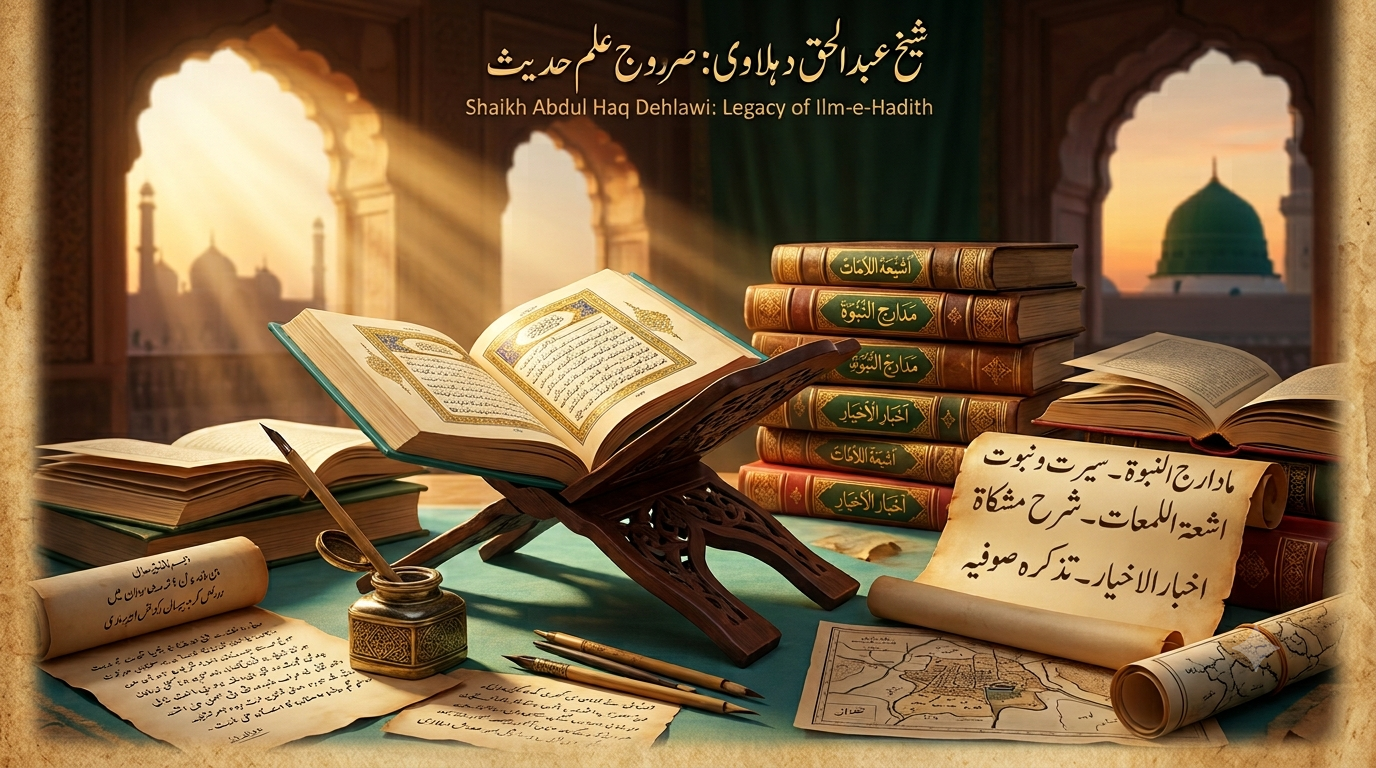
  • Shaikh Abdul Haq Muhaddis Dehlawi رحمۃ اللہ علیہ

    Shaikh Abdul Haq Muhaddis Dehlawi رحمۃ اللہ علیہ

    Inshort — 2-minute read

    Hadith ke woh scholar jinhon ne Hindustan mein ilm ki ek poori riwayat ko mazboot kiya

    Agar Mughal-era Hindustan ke bade Islamic scholars ki baat ho, to Shaikh Abdul Haq Muhaddis Dehlawi رحمۃ اللہ علیہ ka naam zaroor aata hai.

    Aap 958 Hijri / 1551 CE mein Delhi mein paida hue. Aapka talluq ek ilm-pasand gharane se tha aur bachpan hi se Islamic sciences ki taraf gehra rujhan tha. Baad mein aap ne Hindustan se Makkah aur Madinah ka safar kiya, jahan aap ne Hadith aur doosre uloom ki taleem hasil ki. Aapke mashhoor asatiza mein Shaikh Abdul Wahhab Muttaqi رحمۃ اللہ علیہ ka naam milta hai. [1][2]

    Hijaz se wapas Delhi aane ke baad aap ne apni zindagi ka bada hissa teaching, tasneef aur Hadith ki khidmat mein guzara.

    Aur yahan se asli story start hoti hai.

    Aap sirf Hadith ki books padhne wale scholar nahi the. Aap ne Hadith, Seerah, Fiqh, Tasawwuf, history aur biographies par bhi kaam kiya.

    Aapki mashhoor tasaneef mein:

    • Ashi’at al-Lama’at — Mishkat al-Masabih ki Persian sharh
    • Lama’at al-Tanqih — Hadith se related Arabic scholarly work
    • Madarij al-Nubuwwah — Seerah aur Nubuwwat par mashhoor kitab
    • Akhbar al-Akhyar — Hindustan ke buzurgon aur Sufiya ke ahwal par important tazkira
    • Tarikh-i Haqqi — historical work

    sabse zyada mashhoor hain. [1][3][4]

    Khaas taur par Akhbar al-Akhyar ko samajhna important hai. Is mein Hindustan ke kai buzurgon aur Sufiya ke biographies preserve ki gayi hain. Ye kitab 1001 Hijri mein mukammal hui aur medieval Indian Sufism ke mutale ke liye ek important primary source ban gayi. [3][5]

    Yani Shaikh Abdul Haq رحمۃ اللہ علیہ sirf apne liye ilm jama nahi kar rahe the.

    Woh ilm ko document bhi kar rahe the, teach bhi kar rahe the aur next generation tak transfer bhi kar rahe the.

    Aapki zindagi Mughal badshahon Akbar, Jahangir aur Shah Jahan ke daur se guzri. Is poore period mein Hindustan ka religious aur intellectual environment kaafi active tha, aur Shaikh Abdul Haq رحمۃ اللہ علیہ bhi apni scholarly activities ke zariye is intellectual world ka important hissa rahe. [2]

    Aapki wafat 1052 Hijri / 1642 CE mein Delhi mein hui. Aapki umr riwayaton ke mutabiq taqreeban 94 saal thi. [2][5]

    Lekin centuries baad bhi unka naam isliye zinda hai kyunki unhone sirf books nahi chhodi—

    unhone ek ilm ki riwayat chhodi.

    Aaj jab information literally ek click door hai, Shaikh Abdul Haq Muhaddis Dehlawi رحمۃ اللہ علیہ ki life humein ek simple lesson deti hai:

    Ilm sirf collect karne ke liye nahi hota. Ilm ko samajhna, preserve karna aur aage pohanchana bhi hota hai.


    Detailed Article

    Delhi ke ek scholar se Hindustan ke mashhoor Muhaddis tak

    Aaj se 400 saal pehle, jab na Google tha, na online libraries, na PDFs aur na hi kisi kitab ko download karne ka option…

    Hindustan mein ek aise scholar guzre jinhon ne Hadith, Seerah, history, fiqh aur tasawwuf ke fields mein aisa kaam kiya jiska asar aaj tak Islamic scholarship mein nazar aata hai.

    Naam tha:

    Shaikh Abdul Haq Muhaddis Dehlawi رحمۃ اللہ علیہ.

    Aapko aam tor par Muhaddis Dehlawi kaha jata hai — yani Delhi se nisbat rakhne wale Hadith ke bade scholar.

    Lekin unki biography ko sirf “ek muhaddis ki biography” kehna unki personality ko kaafi chhota kar deta hai.

    Woh teacher bhi the, author bhi, researcher bhi, historian bhi aur Sufi scholarship ke important naaqil bhi.


    Delhi mein paidaish

    Shaikh Abdul Haq رحمۃ اللہ علیہ ki paidaish 958 Hijri / 1551 CE mein Delhi mein hui.

    Unka gharana ilm se juda hua tha aur unke walid Shaikh Saifuddin bhi ilm aur ruhaniyat se wabasta the.

    Isliye unki tarbiyat ka environment aam nahi tha.

    Bachpan se hi unka rujhan ilm ki taraf tha aur unhone apne zamane ke mukhtalif uloom hasil kiye.

    Unki zindagi ko samajhne ke liye ek cheez yaad rakhni chahiye:

    Unke liye ilm koi side hobby nahi tha. Ye unki poori zindagi ka mission ban gaya.

    Unki biography aur scholarly career par baad ke researchers ne bhi isi continuous pursuit of knowledge ko unki personality ki central feature bataya hai. [2][6]


    Phir Delhi se Hijaz ka safar

    Ilm ki talab mein Shaikh Abdul Haq رحمۃ اللہ علیہ ne Makkah aur Madinah ka safar kiya.

    Ye trip sirf Hajj ya ziyarat tak limited nahi thi.

    Wahan unhone ulama se baqaida ilm hasil kiya, khaas taur par Hadith aur Tasawwuf ke fields mein.

    Unke important teachers mein Shaikh Abdul Wahhab Muttaqi رحمۃ اللہ علیہ ka naam milta hai.

    Baad ki scholarly studies bhi ye batati hain ke Hijaz mein guzara hua ye period unki intellectual development mein extremely important tha. [2][6]

    Yani ek young scholar Delhi se nikla…

    Makkah aur Madinah gaya…

    Wahan ke scholars se ilm liya…

    Aur phir wapas Hindustan aaya.

    Lekin wapas aate waqt woh sirf ek student nahi tha.

    Ab woh ek trained scholar tha.


    Delhi wapas aaye — aur teaching ka silsila shuru hua

    Hijaz se wapas Delhi aane ke baad Shaikh Abdul Haq رحمۃ اللہ علیہ ne apni zindagi ka bada hissa teaching aur writing mein guzara.

    Unhone students ko ilm diya aur apni tasaneef ke zariye knowledge ko preserve kiya.

    Yahan unki personality ka ek bahut important aspect saamne aata hai:

    Woh sirf kitab likhne wale author nahi the.

    Unki books ke peeche ek complete scholarly system tha:

    Teacher → Student → Research → Writing → Transmission

    Aur isi wajah se unka naam Hindustan ki Hadith scholarship ki history mein important bana.

    Modern academic research mein bhi unki Hadith scholarship ko specifically study kiya gaya hai. Muhammad Aqeel ki Aligarh Muslim University ki PhD thesis ka title hi hai:

    Shaikh Abdul Haque’s Contribution to the Science of Hadith. [6]


    Hadith ke saath Seerah bhi

    Shaikh Abdul Haq رحمۃ اللہ علیہ ki sabse famous books mein se ek hai:

    Madarij al-Nubuwwah

    Ye Nabi-e-Kareem ﷺ ki Seerah aur Nubuwwat se related ek extensive work hai.

    Is kitab se ek important point samajh aata hai:

    Shaikh Abdul Haq رحمۃ اللہ علیہ ke nazdeek Islamic scholarship ko sirf ek subject mein lock nahi kiya ja sakta tha.

    Hadith ko samajhna hai?

    Seerah ko samjho.

    Seerah ko samajhna hai?

    Hadith aur riwayat ko samjho.

    Aur religious tradition ko samajhna hai?

    Uske scholars aur historical transmission ko bhi samjho.

    Yani unki scholarship interconnected thi.


    Ashi’at al-Lama’at — Mishkat ki sharh

    Unki ek aur mashhoor tasneef hai:

    Ashi’at al-Lama’at

    Ye Mishkat al-Masabih ki Persian sharh hai.

    Mishkat al-Masabih Hadith ki mashhoor compilations mein se hai, aur Shaikh Abdul Haq رحمۃ اللہ علیہ ne is par detailed explanation likhi.

    Isi ke saath unki Arabic work Lama’at al-Tanqih bhi Hadith scholarship mein mashhoor hai. [1][6]

    Socho…

    Aaj hum kisi Hadith ki explanation samajhne ke liye ek video kholte hain.

    Us zamane mein ek scholar ko:

    riwayat dekhni hoti thi → texts compare karne hote the → Arabic sources consult karne hote the → phir explanation likhni hoti thi.

    Aur ye kaam ek-do kitab tak limited nahi tha.


    Akhbar al-Akhyar — Hindustan ke buzurgon ka record

    Shaikh Abdul Haq رحمۃ اللہ علیہ ki sabse valuable works mein se ek hai:

    Akhbar al-Akhyar fi Asrar al-Abrar

    Ye Persian mein likhi gayi ek important tazkira hai.

    Is mein Hindustan ke kai buzurgon, Sufiya aur religious personalities ke biographies preserve ki gayi hain.

    Available manuscript/catalogue information ke mutabiq ye work 1001 Hijri mein complete hua tha. [3][5]

    Aur ye sirf ek devotional biography collection samajh kar side mein rakh dena bhi theek nahi hoga.

    Modern academic research mein Akhbar al-Akhyar ko medieval Indian Sufism ke mutale ke liye ek important source ke taur par study kiya gaya hai. Dr. Abdul Majid Khan ne apne research paper mein ise Indian Sufis ki biographies ke dependable scholarly collections mein shumar kiya hai. [5]

    Is kitab ki ek aur interesting baat:

    Shaikh Abdul Haq رحمۃ اللہ علیہ khud Hadith ke trained scholar the.

    Isliye religious personalities aur riwayat ko record karte waqt unki scholarly background bhi important ho jati hai.


    History bhi likhi

    Aksar jab Shaikh Abdul Haq رحمۃ اللہ علیہ ka naam aata hai to log sirf Hadith aur Tasawwuf ki books ka zikr karte hain.

    Lekin unki writings mein historical interest bhi nazar aata hai.

    Unki Tarikh-i Haqqi South Asian history se related work hai.

    Yani ek hi scholar:

    Hadith likh raha hai.

    Seerah likh raha hai.

    Sufiya ke biographies record kar raha hai.

    Aur history bhi document kar raha hai.

    Ye breadth hi unki scholarly personality ko interesting banati hai.


    Mughal India ka zamana

    Shaikh Abdul Haq رحمۃ اللہ علیہ ka poora adult life Mughal India ke ek important period mein guzra.

    Unhone Akbar, Jahangir aur Shah Jahan ke daur dekhe.

    Ye woh zamana tha jab Hindustan mein political power ke saath-saath religious aur intellectual discussions bhi intense the.

    Shaikh Abdul Haq رحمۃ اللہ علیہ apni scholarly writings aur teaching ke zariye is environment ka hissa rahe.

    Kuch later biographical sources unki rulers ke saath correspondence aur religious matters par unke stance ka zikr karte hain. In details ko quote karte waqt source-specific wording rakhna zaroori hai, kyunki later biographies mein presentation mukhtalif milti hai. [2][4]

    Isliye biography ka safest aur strongest point ye hai:

    Woh apne zamane ke religious aur intellectual world se deeply engaged scholar the.


    Sirf kitabain nahi — students bhi

    Kisi bhi scholar ka legacy sirf uski books se measure nahi hota.

    Ek scholar ki asli impact chain kuch is tarah hoti hai:

    Teacher → Student → Student ke students → Books → Institutions → Intellectual tradition

    Shaikh Abdul Haq رحمۃ اللہ علیہ ne teaching ke zariye generations of students ko train kiya.

    Isi liye unka naam sirf ek individual author ke taur par nahi, balki Hindustan ki Islamic scholarly tradition ke ek important link ke taur par yaad kiya jata hai. [2][6]


    Unki tasaneef kitni thin?

    Yahan thoda careful rehna zaroori hai.

    Aapki tasaneef ki exact number ke bare mein sources mein ek jaisi counting nahi milti.

    Isliye “unhone exactly X books likhin” kehna bina specific bibliography verify kiye ideal nahi.

    Lekin ye clear hai ke unhone Arabic aur Persian mein bahut si tasaneef chhodi.

    Mashhoor works mein:

    • Akhbar al-Akhyar
    • Madarij al-Nubuwwah
    • Ashi’at al-Lama’at
    • Lama’at al-Tanqih
    • Tarikh-i Haqqi
    • aur doosre Hadith, fiqh, tasawwuf aur religious subjects par works

    shamil hain. [1][3][6]


    94 saal ki zindagi

    Shaikh Abdul Haq رحمۃ اللہ علیہ ne taqreeban 94 saal ki zindagi payi.

    Unka inteqal 1052 Hijri / 1642 CE mein Delhi mein hua.

    Unki tadfeen Delhi ke Hauz-i-Shamsi / Mehrauli ke ilaqe mein hui. [2][4]

    Ek taraf dekhiye:

    958 Hijri mein Delhi mein ek bachcha paida hua.

    Phir woh ilm seekhta hai.

    Hijaz jata hai.

    Makkah aur Madinah ke ulama se ilm leta hai.

    Delhi wapas aata hai.

    Students ko teach karta hai.

    Hadith par sharah likhta hai.

    Seerah likhta hai.

    Sufiya ke biographies record karta hai.

    History likhta hai.

    Aur phir 1052 Hijri mein duniya se chala jata hai.

    Lekin…

    uski books reh jaati hain.

    Aur books ke zariye ilm ki woh chain aage chalti rehti hai.


    Aaj ke youth ke liye unki biography ka kya matlab hai?

    Shaikh Abdul Haq Muhaddis Dehlawi رحمۃ اللہ علیہ ki biography ko sirf dates ya books ki list bana dena easy hai.

    958 Hijri — birth.

    996 Hijri — Hijaz.

    1052 Hijri — death.

    Bas story khatam.

    Lekin actual lesson yahan hai:

    Unhone ilm ko consume nahi kiya — contribute bhi kiya.

    Aaj hamare paas information ki koi shortage nahi.

    YouTube.

    Google.

    PDFs.

    Online courses.

    AI.

    Digital libraries.

    Lekin information aur ilm ek cheez nahi.

    Ilm ke liye:

    seekhna padta hai.

    teacher se lena padta hai.

    samajhna padta hai.

    verify karna padta hai.

    likhna padta hai.

    Aur phir doosron tak pohanchana padta hai.

    Shaikh Abdul Haq Muhaddis Dehlawi رحمۃ اللہ علیہ ki life ka sabse powerful lesson isi process mein chhupa hua hai:

    Ilm sirf apne paas rakhne ki cheez nahi. Ilm ek amanat hai — jo seekho, use samjho, preserve karo aur aage pohanchao.

    Allah Ta’ala Shaikh Abdul Haq Muhaddis Dehlawi رحمۃ اللہ علیہ par apni rehmat farmaye aur humein bhi ilm-e-nafi hasil karne aur uski khidmat karne ki taufeeq ata farmaye. Ameen.


    References / Primary aur Scholarly Sources

    [1] Shaikh Abdul Haq Muhaddis Dehlawi, Ashi’at al-Lama’at fi Sharh Mishkat al-Masabih.
    Mishkat al-Masabih ki Persian sharh. Shaikh Abdul Haq ki Hadith scholarship ko samajhne ke liye primary source.

    [2] Shaikh Abdul Haq Muhaddis Dehlawi, Akhbar al-Akhyar fi Asrar al-Abrar.
    Author ka apna Persian tazkira. Is mein Hindustan ke mashayikh aur Sufiya ke biographies ke saath author ke scholarly environment ko samajhne ke liye bhi material milta hai. Rekhta ke catalogue ke mutabiq work 1001 AH mein complete hua. (Rekhta)

    [3] Shaikh Abdul Haq Muhaddis Dehlawi, Madarij al-Nubuwwah.
    Seerah aur Nubuwwat par unki mashhoor tasneef; unki religious scholarship aur Seerah methodology ke liye primary source.

    [4] Shaikh Abdul Haq Muhaddis Dehlawi, Tarikh-i Haqqi.
    Historical work attributed to the author; Mughal-era South Asian history ke hawale se unki historical writing ko study karne ke liye important source.

    [5] Abdul Majid Khan, “Some Features of Shaikh Abdul Haq Muhaddith Dehlawi’s Akhbar al-Akhyar fi Asrar al-Abrar,” Insight Islamicus, Vol. 17 (2017).
    Is scholarly study mein Akhbar al-Akhyar ki nature, sources aur historical value discuss ki gayi hai. (Shah-i-Hamadan Institute)

    [6] Muhammad Aqeel, Shaikh Abdul Haque’s Contribution to the Science of Hadith, PhD Thesis, Department of Islamic Studies, Aligarh Muslim University, 2008.
    Shaikh Abdul Haq ki life, education, Hadith scholarship aur literary contribution par dedicated academic research. Thesis AMU mein submit hui thi. (Scribd)

    [7] Abdul Haq Muhaddis Dehlawi, Akhbar al-Akhyar, manuscript, Jamia Hamdard Repository, MS 1661.
    Jamia Hamdard ke manuscript catalogue mein original Persian manuscript listed hai; record 247 pages ka hai. (Jamia Hamdard Repository)

  • Al-Khwarizmi: Woh Shakhs Jiske Naam Se Algebra Aur Algorithm Dono Jude Hain

    Al-Khwarizmi: Woh Shakhs Jiske Naam Se Algebra Aur Algorithm Dono Jude Hain

    ⏱️ 2-Minute Read — In Short

    Aaj hum Algebra padhte hain, Algorithms use karte hain, aur decimal numbers ke bina modern technology imagine bhi nahi kar sakte.

    Lekin in sab ki history humein 9th-century Baghdad tak le jaati hai — aur ek Central Asian Muslim scholar tak:

    Muhammad ibn Musa al-Khwarizmi.

    Al-Khwarizmi Abbasid era ke ek mathematician, astronomer aur geographer the. Woh Khwarazm region se Baghdad aaye aur wahan ke flourishing scientific environment ka hissa bane. Unki exact birth date maloom nahi, lekin unki activity early-to-mid 9th century mein Abbasid Baghdad se strongly associated hai. [1][2]

    1. Algebra ka naam kahan se aaya?

    Al-Khwarizmi ki sabse famous mathematical book thi:

    Al-Kitab al-Mukhtasar fi Hisab al-Jabr wal-Muqabala

    Ismein equations ko systematically solve karne ke methods explain kiye gaye the.

    Isi title ke word al-jabr se eventually English word:

    Algebra

    nikla. [3][4]

    Lekin ek important correction:

    Al-Khwarizmi ne algebra from zero invent nahi kiya tha.

    Babylonians, Greeks aur Indian mathematicians unse pehle mathematical problems aur equations par kaam kar chuke the.

    Unki importance ye thi ki unhone algebraic problems ko ek systematic, practical framework mein organise kiya. [3][5]

    2. Kya unhone X invent kiya?

    Nahi.

    Modern algebra mein jo x unknown number ke liye use hota hai, woh unke time mein exist nahi karta tha.

    Al-Khwarizmi equations ko words ke through describe karte the, modern symbols ke through nahi. [3]

    3. Numbers bhi unhone invent nahi kiye

    Aaj ke:

    0 1 2 3 4 5 6 7 8 9

    ko commonly “Arabic numerals” kaha jata hai.

    Lekin inka deeper historical origin Indian mathematical tradition mein hai.

    Indian mathematicians ne decimal place-value system aur zero ke mathematical use ko develop kiya. Arabic-speaking scholars ne in ideas ko adopt, develop aur transmit kiya.

    Al-Khwarizmi ka arithmetic work isi transmission mein ek important link tha. [6][7]

    Isliye unhein “zero ka inventor” kehna bhi accurate nahi hai.

    4. Phir “Algorithm” naam kahan se aaya?

    Yahan unka naam directly hamare modern world se connect hota hai.

    Al-Khwarizmi ke naam ko medieval Latin writers ne Algoritmi / Algorismi jaise forms mein likha.

    Isse algorismus naam ka mathematical term develop hua, jo eventually English algorithm bana. [8][9]

    Aaj algorithm ka matlab hai:

    kisi problem ko solve karne ka step-by-step procedure.

    Al-Khwarizmi ne modern computer algorithms invent nahi kiye the, lekin “algorithm” word ki linguistic history unke naam se judi hui hai.

    5. Woh sirf mathematician nahi the

    Al-Khwarizmi ne geography aur astronomy par bhi kaam kiya.

    Unki geography book:

    Kitab Surat al-Ard

    Ptolemy ki geographical tradition se influenced thi, lekin al-Khwarizmi ne geographical coordinates ko compile aur revise kiya. [1][10]

    Unhone astronomy ke liye bhi astronomical tables (zij) par kaam kiya. [1]

    Bottom line

    Al-Khwarizmi ne:

    • Algebra ko systematic form dene mein major contribution diya.
    • Al-jabr ke through “algebra” naam ko janam diya.
    • Indian decimal arithmetic ko Arabic scientific tradition mein transmit kiya.
    • Unke Latinized naam se algorithm word develop hua.
    • Geography aur astronomy mein bhi important works likhe.

    To next time jab aap algebra ka equation solve karein ya algorithm ka naam sunen, to 9th-century Baghdad ke is scholar ko yaad kar sakte hain.

    Lekin unki story ko exaggerate karne ki zaroorat nahi.

    Unki actual contribution hi kaafi remarkable hai.


    Detailed Article

    Baghdad se Algebra aur Algorithm tak ki kahani

    Aaj ke digital world mein “algorithm” ek normal word hai.

    Google Search se lekar Instagram feed, navigation apps, banking systems aur artificial intelligence tak — software algorithms par depend karta hai.

    Aur school mein hum algebra padhte hain:

    2x + 5 = 15

    Lekin surprisingly, dono words ki historical story humein ek hi medieval Muslim scholar tak le jaati hai:

    Muhammad ibn Musa al-Khwarizmi.

    Unki mathematics ne Islamic Golden Age ke scientific tradition mein ek important role play kiya, aur unke works ke Latin translations ne medieval Europe ke mathematical development ko influence kiya. [1][2][8]

    Lekin internet par unke baare mein kai exaggerated claims bhi milte hain.

    Isliye pehle facts ko myths se separate karna zaroori hai.


    Al-Khwarizmi kaun the?

    Abu Ja’far Muhammad ibn Musa al-Khwarizmi ke personal life ke baare mein bahut limited information available hai.

    Unki exact birth date known nahi hai. Scholars generally unhein late 8th ya early 9th century mein born aur approximately 850 CE ke aas-paas deceased mante hain. Unka nisbah “al-Khwarizmi” unka connection Khwarazm se indicate karta hai — Central Asia ka woh historical region jo roughly present-day Uzbekistan, Turkmenistan aur surrounding areas se associated tha. [1][2]

    Unki intellectual career ka major part Abbasid Baghdad se connected tha.

    Aur Baghdad us waqt sirf political capital nahi tha.

    Ye scholarship ka bhi ek major centre tha.


    Abbasid Baghdad: Knowledge ka ek major centre

    8th aur 9th centuries mein Abbasid Caliphate ke under Greek, Persian aur Indian scientific traditions ke texts Arabic mein translate aur study kiye ja rahe the.

    Caliph al-Ma’mun ke reign mein astronomy, mathematics, geography, medicine aur philosophy jaise subjects par scholarly activity ko strong patronage mila. [11]

    Isi environment mein al-Khwarizmi ka scientific career develop hua.

    Yahan ek popular claim ko correct karna zaroori hai.

    Internet par Bayt al-Hikma — House of Wisdom ko aksar “medieval Google” ya “ancient NASA” kaha jata hai.

    Ye catchy analogy hai, lekin historical reality itni straightforward nahi.

    Bayt al-Hikma ki exact institutional nature aur activities par historians ke beech discussion hai. Isliye al-Khwarizmi ki achievements ko sirf “House of Wisdom mein kaam karne wale librarian” ke narrative tak reduce karna accurate nahi hai. [11]

    Better ye kehna hai:

    Al-Khwarizmi Abbasid Baghdad ke extraordinarily active scientific environment ka hissa the.


    Algebra ka naam kaise bana?

    Ab aate hain unki sabse famous contribution par.

    Al-Khwarizmi ki mathematical work ka sabse famous title hai:

    Al-Kitab al-Mukhtasar fi Hisab al-Jabr wal-Muqabala

    Iska approximate English translation hai:

    The Compendious Book on Calculation by Completion and Balancing.

    Is book mein al-Khwarizmi ne equations ko systematic forms mein divide kiya aur unko solve karne ke methods explain kiye. [3][4]

    Book ke title ka ek word tha:

    Al-Jabr

    Isi se European languages mein eventually:

    Algebra

    word develop hua. [4][8]


    Lekin Algebra unse pehle bhi exist karti thi

    Ye point important hai.

    Agar hum kahe:

    “Al-Khwarizmi ne Algebra invent ki.”

    to ye historically incomplete statement hogi.

    Unse centuries pehle Babylonian mathematicians equations aur mathematical problems solve kar rahe the.

    Greek mathematician Diophantus ne bhi algebraic problems par important work kiya tha.

    Indian mathematicians ne bhi mathematics aur numerical methods ko significantly develop kiya tha.

    Al-Khwarizmi ka major contribution ye tha ki unhone different mathematical traditions ke available knowledge ko use karte hue equation-solving ko ek systematic and practical discipline ki form mein present kiya. [3][5]

    Ye distinction actually unki achievement ko kam nahi karta.

    Rather, science ka development isi tarah hota hai:

    existing knowledge → improvement → systematization → transmission → further development


    Unki Algebra practical problems ke liye thi

    Al-Khwarizmi ki algebra sirf theoretical equations ka collection nahi thi.

    Unki book ke introduction mein practical problems ka zikr milta hai — including inheritance, commercial transactions, land measurement aur other calculations. [3][4]

    Yani mathematics ka purpose tha real-world problems ko solve karna.

    Aaj hum ise kuch is tarah samajh sakte hain:

    Business + property + inheritance + measurement = mathematics ki practical application.

    Isliye unki algebra ek practical computational discipline thi.


    Kya Al-Khwarizmi ne X invent kiya?

    Social media par kabhi-kabhi ye claim milta hai:

    “Al-Khwarizmi invented X.”

    Ye correct nahi hai.

    Modern mathematical notation mein x unknown ke liye use hota hai, lekin al-Khwarizmi ke original work mein modern symbolic notation nahi thi.

    Unki equations words ke through explain ki jati thi.

    For example, jahan hum aaj likh sakte hain:

    x² + 10x = 39

    al-Khwarizmi is tarah ki mathematical relationship ko words aur geometric reasoning ke through explain karte the. [3]

    Modern algebraic symbolism centuries ke development ka result hai.

    So accurate statement:

    Al-Khwarizmi ne unknown quantities aur equations ko systematically solve karne ke methods develop kiye; modern “x” notation unki invention nahi thi.


    Ab numbers ki story

    Ab aate hain ek aur major contribution par.

    Aaj hum decimal numbers ko itna naturally use karte hain ki imagine karna mushkil hai ki calculation kisi aur system se bhi ho sakti thi.

    Lekin history mein numerical notation gradually develop hui.

    Roman numerals dekhiye:

    I, V, X, L, C, D, M

    Aur modern positional notation:

    1, 2, 3, 4…

    Positional decimal system calculations ko dramatically easier banata hai.

    Is tradition ki important foundations India mein develop hui thi. [6][7]


    Indian Mathematics aur Zero

    Indian mathematicians ne decimal place-value system ko develop kiya aur zero ko mathematical operations mein increasingly systematic way se treat kiya.

    7th century ke Indian mathematician Brahmagupta ne zero ke arithmetic rules ko explicitly discuss kiya.

    Ye development baad mein Islamic world tak pahucha.

    Arabic-speaking mathematicians ne Indian numerical ideas ko adopt aur develop kiya.

    Al-Khwarizmi ne Indian arithmetic tradition par ek work likha, jiska title Latin tradition mein:

    Algoritmi de numero Indorum

    ke form mein known hua — roughly:

    “Al-Khwarizmi on the Indian numbers.” [6][8]

    Original Arabic arithmetic text survive nahi karta, lekin later Latin tradition se uske contents aur influence ka reconstruction possible hai. [6]


    To kya Al-Khwarizmi ne 0–9 invent kiya?

    Nahi.

    Ye distinction important hai.

    Unhone digits 0–9 invent nahi kiye.

    Aur unhone zero ko bhi single-handedly invent nahi kiya.

    Indian mathematical tradition already developed the foundations of this numerical system.

    Al-Khwarizmi ka role tha is mathematical tradition ko Arabic scientific literature mein explain aur transmit karna, jahan se ye knowledge eventually Europe tak pahunchi. [6][7]

    Isi liye modern historians commonly Hindu-Arabic numerals ka term use karte hain.

    Ye naam khud history ki journey explain karta hai:

    Indian mathematical tradition → Arabic/Islamic scholarly world → Europe


    “Arabic Numerals” phir kyun kehte hain?

    Good question.

    Europe mein ye numerals Arabic scientific and commercial networks ke through aaye.

    European scholars ne inhe Arabic-language texts aur scholars ke through encounter kiya.

    Isliye “Arabic numerals” naam popular hua.

    Lekin deeper origin ko acknowledge karne ke liye:

    Hindu-Arabic numerals

    term more historically informative hai. [6][7]

    Aur al-Khwarizmi is transmission chain ke important early figures mein se ek the.


    Geography: Al-Khwarizmi ka doosra major field

    Agar aap soch rahe hain ki al-Khwarizmi sirf mathematics karte the, to story abhi incomplete hai.

    Unhone geography par bhi major work likha:

    Kitab Surat al-Ard

    Usually translated as:

    The Image of the Earth.

    Ye Ptolemy ki Geography se strongly influenced tha.

    Lekin al-Khwarizmi ne sirf Ptolemy ko copy nahi kiya.

    Unhone geographical locations ke coordinates ko compile aur revise kiya, aur Islamic world aur surrounding regions ke data ko improve kiya. [1][10]

    Unke work mein approximately 2,400 se zyada localities ke coordinates record kiye gaye the. [1]

    Ye ek massive geographical data project tha.


    Kya unhone world’s first atlas banaya?

    Internet par ek claim milta hai ki:

    “Al-Khwarizmi ne 70 geographers ki team banakar world’s first atlas banaya.”

    Ye wording historically too strong hai.

    Ptolemy ki Geography al-Khwarizmi se centuries pehle exist karti thi.

    Maps aur geographical works ki tradition bhi unse pehle thi.

    Isliye “world’s first atlas” kehna accurate nahi hai. [10]

    Better description ye hai:

    Al-Khwarizmi ne Ptolemaic geographical tradition ko Arabic scientific context mein revise kiya aur large numbers of geographical coordinates ko systematically compile kiya.

    Ye claim khud kaafi impressive hai.


    Astronomy mein bhi kaam

    Al-Khwarizmi ne astronomy par bhi work kiya.

    Unka astronomical handbook commonly Zij al-Sindhind ke naam se jana jata hai.

    Ismein calendars, astronomical calculations aur planetary positions se related tables aur methods shamil the. Indian astronomical traditions ka bhi is work par significant influence tha. [1]

    Isliye al-Khwarizmi ko sirf mathematician kehna bhi incomplete picture hai.

    Woh:

    Mathematician + Astronomer + Geographer

    the.


    Algorithm: Unke naam ki sabse surprising legacy

    Ab aate hain modern world se unke sabse direct linguistic connection par.

    Aaj “algorithm” computer science ka basic word hai.

    Lekin iska original connection computers se nahi hai.

    Connection hai:

    Al-Khwarizmi ke naam se.

    Arabic name al-Khwarizmi Latin texts mein different forms mein transcribe hua, including:

    Algoritmi / Algorismi

    Medieval Latin mathematical literature mein algorismus naam ka term develop hua, jo arithmetic calculation ke methods ke liye use hota tha.

    Eventually ye English:

    Algorithm

    ban gaya. [8][9]


    Lekin kya Al-Khwarizmi ne algorithms invent kiye?

    Again:

    Not exactly.

    Step-by-step procedures al-Khwarizmi se bahut pehle exist karte the.

    Euclid ka greatest common divisor find karne wala method, for example, ek algorithmic procedure hai.

    Al-Khwarizmi ka significance yahan ye hai ki modern word “algorithm” ki linguistic ancestry unke Latinized name tak jati hai, aur unki arithmetic methods medieval Latin algorismus tradition ka important part bani. [8][9]

    Modern computer algorithms ka development much later mathematics, logic aur computing ke long history ka result hai.


    Europe tak unka kaam kaise pahucha?

    9th-century Baghdad mein likha gaya mathematical work Europe mein immediately popular nahi hua.

    Arabic scientific knowledge ka Latin Europe mein transmission largely 12th-century translation movement ke through accelerate hua.

    Al-Khwarizmi ki algebra ka Latin translation Robert of Chester se associated hai aur approximately 1145 CE ka date diya jata hai. [12]

    Unki arithmetic tradition ke bhi Latin adaptations circulate hue.

    Is process mein Arabic se Latin translation ke saath European scholars ki apni mathematical developments bhi involved thi.

    Yani:

    Baghdad → Arabic manuscripts → Latin translations → European scholars → wider mathematical tradition

    Ye centuries-long knowledge transfer tha.


    Fibonacci aur Europe mein Numerals

    Hindu-Arabic numerals ke European spread ki story mein Leonardo of Pisa, jise Fibonacci ke naam se jana jata hai, ka role bhi important hai.

    1202 mein Fibonacci ne:

    Liber Abaci

    likhi.

    Is book ne Hindu-Arabic numerals aur positional calculation ko European commercial mathematics ke context mein popularize kiya. [13]

    Isliye European adoption ko sirf al-Khwarizmi ke naam se explain karna incomplete hoga.

    Al-Khwarizmi ek earlier transmission link the.

    Fibonacci later European adoption ka major figure bana.


    Kya Europe ne Arabic numerals ko ban kar diya tha?

    Is topic par bhi internet par dramatic claims milte hain.

    Medieval Europe mein Hindu-Arabic numerals ko immediately universally accept nahi kiya gaya.

    Different regions aur institutions mein old Roman numeral traditions aur new numerical methods ka coexistence raha.

    Florence mein 1299 ke regulations ne certain financial/documentary contexts mein Arabic numerals ke use ko restrict kiya tha, aur figures ki alteration/fraud se related concerns historical discussion ka part hain. [14]

    Lekin isko:

    “Europe ne Arabic numerals ko ban kar diya because they were evil/demonic”

    ke form mein present karna historical evidence se zyada dramatic hai.

    Adoption gradual thi aur commercial arithmetic, mathematical education aur practical calculation ke through ye system eventually dominant ho gaya. [13][14]


    Al-Khwarizmi ne computer invent nahi kiya

    Ek aur popular statement hai:

    “Agar Al-Khwarizmi nahi hote to computers nahi hote.”

    Isko direct historical causation ke taur par prove karna possible nahi.

    Modern computing ek extremely long chain ka result hai:

    ancient mathematics → positional notation → algebra → symbolic mathematics → logic → mechanical computation → electronic computing → computer science

    Al-Khwarizmi is chain ka ek important early link hain.

    Lekin unko “computer ka inventor” kehna accurate nahi hoga.


    Phir aaj ke smartphone se unka connection kya hai?

    Connection direct invention ka nahi, mathematical heritage ka hai.

    Modern software algorithms use karta hai.

    Algorithms mathematical and computational traditions ki long history se emerge hue.

    Aur “algorithm” word ki linguistic history al-Khwarizmi ke Latinized name tak pahunchti hai.

    Isi tarah “algebra” ka naam unki al-jabr wali kitab se connected hai.

    To jab hum kehte hain:

    “Al-Khwarizmi ki legacy modern digital world tak pahunchti hai.”

    to iska matlab ye nahi ki unhone smartphone design kiya tha.

    Matlab ye hai ki unka work us mathematical tradition ka important part tha jisne later developments ko influence kiya.


    Al-Khwarizmi ki real legacy

    Agar hum unki contribution ko simple terms mein dekhein:

    Mathematics

    Equations ko systematic methods ke through solve karne ki tradition ko major contribution.

    Algebra

    Al-jabr se algebra word ki linguistic origin.

    Arithmetic

    Indian decimal place-value tradition ko Arabic scientific literature mein transmit karne mein important role.

    Algorithm

    Al-Khwarizmi ke Latinized name se medieval algorismus aur eventually algorithm word.

    Geography

    Ptolemaic geographical tradition ko revise karte hue coordinates ka large-scale compilation.

    Astronomy

    Astronomical tables aur calculations par important work.


    Sabse important lesson

    Al-Khwarizmi ki story ko “Muslims invented everything” ya “one genius invented modern mathematics” jaise simplistic narratives mein convert karna history ke saath insaaf nahi karega.

    Reality much more interesting hai.

    Knowledge travel karta hai.

    Indian mathematicians ne important numerical ideas develop kiye.

    Greek mathematicians ki works Islamic world mein translate hui.

    Persian, Indian, Greek aur other traditions ke ideas Arabic scientific culture mein study aur develop hue.

    Muslim scholars ne existing knowledge ko preserve hi nahi kiya — usmein new work bhi add kiya.

    Phir Arabic scientific works Latin mein translate hue aur Europe mein further developed hue. [5][6][11][12]

    Al-Khwarizmi isi global chain ke ek crucial figure the.


    Aakhir mein…

    Al-Khwarizmi ne:

    smartphone invent nahi kiya.

    computer invent nahi kiya.

    modern X notation invent nahi ki.

    0–9 digits invent nahi kiye.

    Aur “algorithm” bhi modern computer science ke sense mein unki invention nahi thi.

    Lekin unhone mathematical knowledge ko systematize, develop aur transmit karne mein aisa contribution diya jo centuries tak travel karta raha.

    Ek kitab mein al-jabr tha.

    Ek scholar ka naam Latin mein Algoritmi bana.

    Aur centuries baad duniya mein hum do familiar words bolte hain:

    Algebra.

    Algorithm.

    Ek 9th-century Muslim scholar ki legacy ko samajhne ke liye shayad itna hi kaafi hai:

    Unhone modern world create nahi kiya — lekin unki mathematics modern world ki long intellectual journey ka ek important hissa ban gayi.


    📚 References & Further Reading

    Primary Sources

    [1] Muhammad ibn Musa al-Khwarizmi.
    Al-Kitab al-Mukhtasar fi Hisab al-Jabr wal-Muqabala.
    Edited/translated in various editions; see Frederic Rosen’s English translation below.

    [2] Muhammad ibn Musa al-Khwarizmi.
    Kitab Surat al-Ard (The Image of the Earth).
    Arabic geographical work based partly on the Ptolemaic tradition.

    [3] Muhammad ibn Musa al-Khwarizmi, trans. Frederic Rosen.
    The Algebra of Mohammed Ben Musa. London: Oriental Translation Fund, 1831.

    This contains an English translation of al-Khwarizmi’s algebra and his introduction explaining the practical purpose of the work.

    [4] Robert of Chester, trans.
    Latin translation of al-Khwarizmi’s algebra, c. 1145.

    Robert’s Latin version was an important channel through which al-Khwarizmi’s algebra entered medieval Latin mathematical literature. [12]


    Indian Mathematics & Hindu-Arabic Numerals

    [5] Brahmagupta.
    Brahmasphutasiddhanta, 628 CE.

    An important Indian mathematical work containing systematic rules concerning zero and arithmetic with positive and negative numbers.

    [6] Menso Folkerts.
    “Early Texts on Hindu-Arabic Calculation.”
    Science in Context, 14 (2001), 13–38.

    Useful scholarly study of early texts dealing with Hindu-Arabic calculation and their transmission.

    [7] A. S. Saidan.
    The Arithmetic of Al-Uqlidisi: The Story of Hindu-Arabic Arithmetic.
    D. Reidel, 1978.


    Algorithm & Latin Transmission

    [8] André Allard.
    “The Arabic Origins and Development of Latin Algorisms in the Twelfth Century.”
    Arabic Sciences and Philosophy.

    Discusses the development of Latin algorisms and their Arabic mathematical origins.

    [9] David A. King.
    Studies on Islamic mathematical and astronomical manuscripts and the transmission of Arabic scientific knowledge.


    Geography & Astronomy

    [10] Gerald R. Tibbetts.
    The Beginnings of a Cartographic Tradition.
    Studies on Arabic geographical literature and the development of Islamic cartography.

    [11] A. I. Sabra.
    Studies on Arabic science, Ptolemaic astronomy and the transmission/development of Greek scientific traditions in the Islamic world.


    Translation Movement & Baghdad

    [12] Dimitri Gutas.
    Greek Thought, Arabic Culture: The Graeco-Arabic Translation Movement in Baghdad and Early ’Abbasid Society (2nd–4th/8th–10th Centuries).
    Routledge, 1998.

    An important modern academic study for understanding the Abbasid translation movement and the intellectual environment in which scholars such as al-Khwarizmi worked.


    Fibonacci & Medieval Europe

    [13] Leonardo of Pisa (Fibonacci).
    Liber Abaci, 1202.

    One of the major medieval European works associated with the spread and practical use of Hindu-Arabic numerals in Europe.

    [14] L. C. Karpinski.
    Robert of Chester’s Latin Translation of the Algebra of al-Khowarizmi: With an Introduction, Critical Notes and an English Version.
    New York: Macmillan, 1915.


    Modern Biographical References

    [15] G. J. Toomer.
    “Al-Khwarizmi.” Dictionary of Scientific Biography.
    Charles Scribner’s Sons.

    [16] “Al-Khwarizmi.”
    Encyclopaedia of Islam.

    [17] “Al-Khwarizmi.”
    Encyclopaedia Britannica.

    [18] J. J. O’Connor & E. F. Robertson.
    “Abu Ja’far Muhammad ibn Musa al-Khwarizmi.”
    MacTutor History of Mathematics Archive, University of St Andrews.


    Editorial / Historical Accuracy Note

    Is article mein popular internet claims ko deliberately correct kiya gaya hai.

    “Al-Khwarizmi invented Algebra.”
    → More accurately: unhone algebraic equation-solving ko systematic form mein develop aur present kiya; algebraic mathematics unse pehle bhi exist karti thi.

    “Al-Khwarizmi invented X.”
    → Incorrect. Modern symbolic notation unke work ka part nahi thi.

    “Al-Khwarizmi invented 0–9.”
    → Incorrect. Hindu-Arabic numeral system ki important foundations Indian mathematical tradition mein hain.

    “Al-Khwarizmi invented zero.”
    → Incorrect as a simple one-person invention claim. Zero ka mathematical development ek long historical process tha.

    “He made the world’s first atlas with 70 geographers.”
    → Too strong. Unka Kitab Surat al-Ard Ptolemaic geographical tradition ka important Arabic reworking tha, lekin world’s first atlas nahi tha.

    “Al-Khwarizmi invented computer algorithms.”
    → Incorrect. Modern algorithmic computing much later develop hui. However, the word algorithm is historically derived from the Latinized form of his name.

    History ko exaggerate karne ki zaroorat nahi.

    Al-Khwarizmi ka documented contribution khud extraordinary hai.

  • Makkah aur Madinah ke Mazaraat ka Kya Hua?

    Makkah aur Madinah ke Mazaraat ka Kya Hua?

    Purane Islamic sources, travellers ke accounts aur historical records se ek kahani

    Aaj agar aap Makkah aur Madinah ki pictures dekhen, to naturally aapko lagega ke in muqaddas shehron ka landscape hamesha se aisa hi raha hoga.

    Lekin…

    history mein Makkah aur Madinah aaj se kaafi different nazar aate the.

    Aur iska sabse interesting evidence humein kisi random social-media post se nahi, balki Muslim historians, travellers aur baad ke archival records se milta hai.

    Jannat-ul-Baqi mein kabhi multiple domes aur mausoleums the.

    Makkah ke Jannat-ul-Mu’alla mein important graves ke upar structures maujood the.

    Aur Makkah mein Nabi ﷺ ki wiladat se associated ek jagah ko bhi centuries tak log pehchante aur visit karte rahe.

    Phir in structures ka kya hua?

    Aur kis wajah se hua?

    Chaliye timeline se samajhte hain.


    Sabse pehle: Kya Nabi ﷺ ki wiladat ki jagah historically identify ki jaati thi?

    Is point ko samajhna important hai.

    Makkah ke early historians mein Muhammad ibn Ishaq al-Fakihi (d. 9th century) ki Akhbar Makkah ek important source hai.

    Al-Fakihi Nabi ﷺ ki wiladat se associated ghar ka zikr karte hain aur likhte hain ke ye ghar Dar Ibn Yusuf mein tha.

    Woh ye bhi record karte hain ke al-Khayzuran, jo Abbasid caliphs al-Mahdi ki wife aur al-Hadi aur Harun al-Rashid ki walida thi, is jagah ko alag karke masjid bana diya tha, jahan namaz padhi jaati thi.

    Yani Nabi ﷺ ki wiladat se associated location ko early Islamic Makkah mein religious significance hasil thi.

    Reference:

    1. Muhammad ibn Ishaq al-Fakihi, Akhbar Makkah fi Qadim al-Dahr wa Hadithihi, vol. 4, section on places where prayer is recommended and the relics of the Prophet ﷺ.

    Al-Fakihi ka text is baat ka important early documentary evidence hai. [1]


    Aur phir Ibn Jubayr Makkah aate hain

    Ab history mein ek aur fascinating record milta hai.

    Andalus ke famous traveller Muhammad ibn Ahmad Ibn Jubayr 579 AH / 1183–84 CE ke around Makkah pahunche.

    Unki Rihla sirf travel diary nahi hai.

    Ye 6th century Hijri ke Makkah aur Madinah ko samajhne ke liye important eyewitness source hai.

    Ibn Jubayr Nabi ﷺ ki wiladat ki jagah ke baare mein likhte hain ke Rabi al-Awwal ke Mondays par is blessed place ko khola jaata tha aur log andar jaakar tabarruk hasil karte the, kyunki isi din aur isi mahine Nabi ﷺ ki wiladat hui thi.

    Yani yahan humein 12th-century Makkah ka ek eyewitness account mil raha hai.

    Aur ye point important hai:

    Ye modern Mawlid debate ka social-media claim nahi hai.

    Ye ek medieval Muslim traveller ka recorded observation hai.

    Reference:

    1. Ibn Jubayr, Rihla / The Travels of Ibn Jubayr, description of Makkah, section concerning the Prophet’s birthplace. See also the commonly cited edition, pp. 114–115.

    Ab chaliye Jannat-ul-Baqi

    Jannat-ul-Baqi ko aaj hum ek simple cemetery ki tarah dekhte hain.

    Lekin historical records se pata chalta hai ke Baqi ka physical appearance hamesha aisa nahi tha.

    Madinah ke great historian Ali ibn Ahmad al-Samhudi (d. 911 AH / 1505 CE) ne apni famous kitab:

    Wafa al-Wafa bi Akhbar Dar al-Mustafa

    mein Madinah ke historical sites, graves, mosques aur ziyarat ki jagahon ka detailed record diya.

    Unki kitab Baqi ke structures aur unki history ke liye important primary historical source hai.

    Al-Samhudi ke record mein Baqi ke andar multiple important graves aur unke surrounding structures ka zikr milta hai.

    Baad ke historical records mein bhi in structures ki maintenance aur reconstruction ka zikr aata hai.

    For example, Baqi mein renovation ka ek important record 519 AH ka hai, jab Abbasid Caliph al-Mustarshid ke order par construction/renovation work hua.

    Reference:

    1. Nur al-Din Ali al-Samhudi, Wafa al-Wafa bi Akhbar Dar al-Mustafa, vol. 3, p. 916, for the 519 AH renovation record.

    Lekin ek aur powerful source hai: ek European traveller

    Ab yahan history aur interesting ho jaati hai.

    1814–1815 mein Swiss traveller Johann Ludwig Burckhardt Hijaz mein tha.

    Usne Makkah aur Madinah dono visit kiye.

    Uski book:

    Travels in Arabia

    aaj bhi 19th-century Hijaz ko samajhne ke liye ek important eyewitness source hai.

    Aur Burckhardt ne Baqi ko apni aankhon se dekha.

    Uske account mein ek extraordinary detail milti hai.

    Woh likhta hai ke Baqi mein pehle tombs ke upar small domes aur buildings hua karte the.

    Aur uske waqt unke ruins ab bhi point out kiye ja rahe the.

    Burckhardt specifically records that the ruins of structures that had formerly covered the tombs of Uthman, Abbas, Fatimah and the aunts of Muhammad were attributed to the Wahhabis.

    Lekin yahan ek important point hai:

    Burckhardt sirf ek side ki story nahi deta.

    Woh ye bhi observe karta hai ke cemetery ki poor condition ka kuch hissa local neglect se bhi related tha.

    Yani ek serious historical article ko sirf convenient sentence quote karke baaki context hide nahi karna chahiye.

    Reference:

    1. John Lewis Burckhardt, Travels in Arabia: Comprehending an Account of Those Territories in Hedjaz Which the Mohammedans Regard as Sacred, London, 1829, vol. II, pp. 362–363.

    To 1806 mein kya hua?

    19th century ke beginning mein First Saudi State aur Wahhabi movement ke expansion ke saath Hijaz ka political control change hua.

    1805–1812 ke period mein Wahhabi forces Medina par direct ya indirect control mein rahi.

    Modern academic reference Encyclopaedia Iranica ke mutabiq, is period mein tombs aur domed shrines destroy kiye gaye.

    Aur jab Ottoman-Egyptian forces ne baad mein Hijaz dobara capture kiya, to kai structures reconstruct bhi kiye gaye.

    Reference:

    1. Encyclopaedia Iranica, entry “Shiʿites in Arabia,” discussion of Wahhabi control of Medina, 1805–1812, destruction of tombs and subsequent Ottoman reconstruction.

    Lekin yahan ek bahut important historical distinction hai:

    1806 ki demolition ke baad story khatam nahi hui thi.

    Structures dobara banaye gaye.

    Aur isi wajah se humein 19th aur early 20th century ki photographs mein Baqi ka completely different landscape nazar aata hai.


    Ottoman period: Baqi phir se rebuild hua

    Ottoman rule ke dauran Hijaz mein kai religious structures ko restore aur rebuild kiya gaya.

    19th century ke travellers ke accounts is baat ka evidence provide karte hain.

    British Library aur Qatar Digital Library ke preserved historical material mein Baqi ki photographs available hain jisme demolition se pehle ke domes aur mausoleums clearly visible hain.

    Yani hamare paas:

    written history bhi hai,

    eyewitness accounts bhi hain,

    aur

    photographic evidence bhi hai.


    Aur phir 1926…

    Ab kahani ka sabse well-documented modern chapter aata hai.

    Saudi forces ne 1924–25 mein Hijaz par control establish kiya.

    Aur 1926 mein Jannat-ul-Baqi ke remaining mausoleums aur tomb structures destroy kar diye gaye.

    Modern academic literature is demolition ko Wahhabi religious doctrine ke context mein discuss karti hai, jahan graves ke upar structures aur unse associated veneration ko problematic samjha jaata tha.

    Encyclopaedia Iranica specifically record karti hai ke April 1926 mein al-Baqi ke tombstones aur mausoleums ko destroy karne ka order diya gaya.

    Reference:

    1. Encyclopaedia Iranica, “Shiʿites in Arabia,” section discussing the 1926 destruction of al-Baqi.

    Aur is baar hamare paas photographs bhi hain

    Ye point particularly important hai.

    Agar koi kahe:

    “Baqi mein kabhi domes the hi nahi.”

    to historical photographs iska jawab deti hain.

    Museum With No Frontiers ke Islamic Art database mein early-20th-century Baqi ki photographic documentation preserved hai.

    Photographs mein multiple domed structures aur mausoleums clearly visible hain.

    Reference:

    1. Museum With No Frontiers, Photographic Postcard of the Cemetery of al-Baqi, early 20th century.

    British archives mein bhi controversy ka record hai

    Aur yahan ek aur interesting piece of evidence milta hai.

    British National Archives mein India Office Records ki ek file preserved hai:

    “Hejaz and Indian Muslims. Desecration of tombs by Wahabis, etc.”

    File reference:

    IOR/L/PS/12/2111

    Date:

    1930–1933

    Yani 1926 demolition ke kuch hi saal baad Indian Muslims ne is issue ko international political level par raise kiya.

    Archival material mein Indian Muslim representatives ki appeals preserved hain concerning the destruction of shrines and monuments in the Hijaz.

    Reference:

    1. British Library / The National Archives, India Office Records, IOR/L/PS/12/2111, Hejaz and Indian Muslims. Desecration of tombs by Wahabis, etc., 1930–1933.

    Ye ek important point establish karta hai:

    Baqi ki demolition koi modern internet controversy nahi thi.

    Us waqt bhi Muslims is issue ko publicly aur politically raise kar rahe the.


    Lekin sirf Madinah hi nahi…

    Ab Makkah chalte hain.

    Makkah ka historic cemetery:

    Jannat al-Mu’alla

    ya al-Hajun.

    Yahan Nabi ﷺ ki beloved wife Sayyidah Khadijah رضي الله عنها aur early Islamic history ki kai important personalities madfoon hain.

    Historical descriptions mein is cemetery ke andar important graves aur structures ka zikr milta hai.

    Aur 20th-century Saudi period ke dauran yahan bhi historical tomb structures remove kiye gaye.

    Isliye destruction ka pattern sirf Madinah tak limited nahi tha.

    Makkah bhi is historical transformation se guzra.


    Ab asal question: ye sab destroy kyun kiya gaya?

    Yahan emotions ko side par rakh kar theology ko samajhna zaroori hai.

    Muhammad ibn Abd al-Wahhab ki writings mein graves, tomb structures aur intercession ke issues central theological concerns mein se the.

    Modern historian David Commins apni book The Wahhabi Mission and Saudi Arabia mein explain karte hain ke Ibn Abd al-Wahhab ke theological framework mein graves aur shrines se associated practices ko shirk ke khatre ke context mein dekha gaya.

    Commins specifically Ibn Abd al-Wahhab ke writings aur tomb visitation/intercession ke issue ko discuss karte hain.

    Reference:

    1. David Commins, The Wahhabi Mission and Saudi Arabia, I.B. Tauris, 2005, especially Chapter 2, “Holding Fast Against Idolatry,” pp. 40–70.

    Isi tarah Natana J. DeLong-Bas apni academic study Wahhabi Islam: From Revival and Reform to Global Jihad mein graves, shrines aur intercession ke issue par Ibn Abd al-Wahhab ke views ko discuss karti hain.

    Reference:

    1. Natana J. DeLong-Bas, Wahhabi Islam: From Revival and Reform to Global Jihad, Oxford University Press, 2004, chapter discussing shrines, mosques, tombs and visitation.

    Yani demolition ke peeche ek clear theological reasoning thi.

    Ye random destruction nahi thi.

    Ye ek particular interpretation of Islamic reform ka part thi.


    Lekin yahan ek aur side bhi hai

    Agar hum sirf modern Saudi/Wahhabi explanation padhenge, to humein ek side samajh aayegi.

    Agar hum sirf anti-Wahhabi literature padhenge, to doosri side.

    Isliye historical research ka better tareeqa hai:

    primary sources dekho.

    Ibn Jubayr ko padho.

    Al-Fakihi ko padho.

    Al-Samhudi ko padho.

    Burckhardt ko padho.

    Purani photographs dekho.

    Ottoman records dekho.

    British archival correspondence dekho.

    Phir modern historians ko padho.

    Tab picture zyada clear hoti hai.


    Ek important correction: “1300 saal se same shrines the”

    Yahan ek claim se bachna zaroori hai.

    Social media par kabhi kabhi kaha jaata hai:

    “Ye shrines 1300 saal se continuously isi form mein maujood the aur phir Ibn Abd al-Wahhab ne aakar sab destroy kar diya.”

    History itni simple nahi hai.

    Structures different periods mein banaye, rebuild aur renovate kiye gaye.

    Kuch structures early Islamic period ke nahi the.

    Kuch medieval period mein develop hue.

    Kuch Ottoman period mein reconstruct hue.

    Aur phir 18th–20th centuries mein different demolitions hui.

    Isliye zyada historically accurate statement ye hai:

    Makkah aur Madinah mein important graves aur religious sites ke upar centuries ke dauran architectural structures develop hue, jinmein se kai structures Wahhabi-Saudi conquests ke dauran destroy hue, kuch Ottoman period mein reconstruct hue, aur 1920s mein kai structures dobara demolish kar diye gaye.

    Ye statement evidence ke zyada close hai.


    Aur isi wajah se purani photographs important hain

    Aaj Jannat-ul-Baqi dekhiye.

    Simple graves.

    Open cemetery.

    No large mausoleums.

    Lekin 19th aur early 20th century ke records dekhiye…

    domes nazar aate hain.

    Mausoleums nazar aate hain.

    Architectural structures nazar aate hain.

    Aur phir demolition ke records dekhiye.

    Suddenly picture connect hone lagti hai.


    To history humein kya batati hai?

    History humein ye nahi batati ke har dome automatically Islam ka necessary part tha.

    Aur history ye bhi nahi batati ke har structure shirk tha.

    Ye theological questions hain, aur Muslims ke different schools in par different positions rakhte hain.

    Lekin history ek cheez definitely document karti hai:

    Makkah aur Madinah ka physical landscape time ke saath dramatically change hua hai.

    Aur is change mein graves, mausoleums aur historical religious sites ki demolition bhi ek important chapter hai.

    Is chapter ko samajhne ke liye humein memes nahi…

    books kholni hongi.

    Travelogues padhne honge.

    Old photographs dekhni hongi.

    Archives check karne honge.

    Aur sabse important—

    sources ko khud padhna hoga.

    Kyunki kabhi-kabhi history ka sabse interesting part woh nahi hota jo aaj humein nazar aa raha hai…

    balki woh hota hai:

    jo kabhi wahan tha, aur aaj wahan nahi hai.


    Primary Sources & Further Reading

    Early Muslim Historical Sources

    1. Muhammad ibn Ishaq al-Fakihi — Akhbar Makkah fi Qadim al-Dahr wa Hadithihi
    Early historical account of Makkah. Particularly relevant for the historical identification of the house associated with the Prophet ﷺ’s birth and its later use as a place of prayer.

    2. Muhammad ibn Abdullah al-Azraqi — Akhbar Makkah wa Ma Ja’a Fiha min al-Athar
    One of the foundational works on the history, geography and sacred sites of Makkah.

    3. Ibn Jubayr — Rihla
    First-person travel account of his pilgrimage to Makkah and Madinah in the 6th century AH. Particularly important for descriptions of the Prophet ﷺ’s birthplace and medieval Makkah.

    4. Nur al-Din Ali al-Samhudi — Wafa al-Wafa bi Akhbar Dar al-Mustafa
    One of the major historical works on Madinah. Particularly important for the history of al-Baqi, the Prophet’s Mosque and the city’s sacred sites.

    5. Taqi al-Din al-Fasi — Shifa al-Gharam bi Akhbar al-Balad al-Haram
    Major historical work on Makkah, its sacred sites and places of visitation.


    Eyewitness / Travel Sources

    6. John Lewis Burckhardt — Travels in Arabia: Comprehending an Account of Those Territories in Hedjaz Which the Mohammedans Regard as Sacred
    London: Henry Colburn, 1829, 2 vols.

    Burckhardt personally visited Makkah and Madinah shortly after the first Saudi-Wahhabi conquest and recorded the condition of the cemeteries and surviving ruins.


    Modern Academic Studies

    7. David Commins — The Wahhabi Mission and Saudi Arabia
    London: I.B. Tauris, 2005.

    A modern academic history of the Wahhabi movement and its political alliance with the House of Saud.

    8. Natana J. DeLong-Bas — Wahhabi Islam: From Revival and Reform to Global Jihad
    Oxford: Oxford University Press, 2004.

    Useful for understanding the theological arguments concerning graves, shrines, intercession and religious reform.

    9. Madawi Al-Rasheed — A History of Saudi Arabia
    Cambridge: Cambridge University Press.

    Useful for the political history of the Saudi state, including the conquest and incorporation of the Hijaz.


    Archival & Photographic Evidence

    10. British Library / Qatar Digital Library — India Office Records, IOR/L/PS/12/2111
    Hejaz and Indian Muslims. Desecration of tombs by Wahabis, etc., 1930–1933.

    11. Museum With No Frontiers — Historical photographs of al-Baqi
    Photographic documentation of the cemetery and its pre-demolition structures.


    A note about the sources

    Is article mein primary Muslim historical works ko modern academic scholarship ke saath use kiya gaya hai.

    Jahan kisi historical source mein kisi event ka claim hai, use automatically theological proof nahi samajhna chahiye.

    Aur jahan modern historians kisi event ki interpretation dete hain, us interpretation ko primary source ke barabar nahi samajhna chahiye.

    History ko samajhne ka best tareeqa hai: source ko source ke taur par padhna.